/music-note-flashcards · classroom
Music note flashcards: treble clef, bass clef and note values
Make your ownMusic note cards
Describe yours. We'll remake the whole pack your way.
More like this
the whole catalog →
every sample — three subjects, three styles ↓
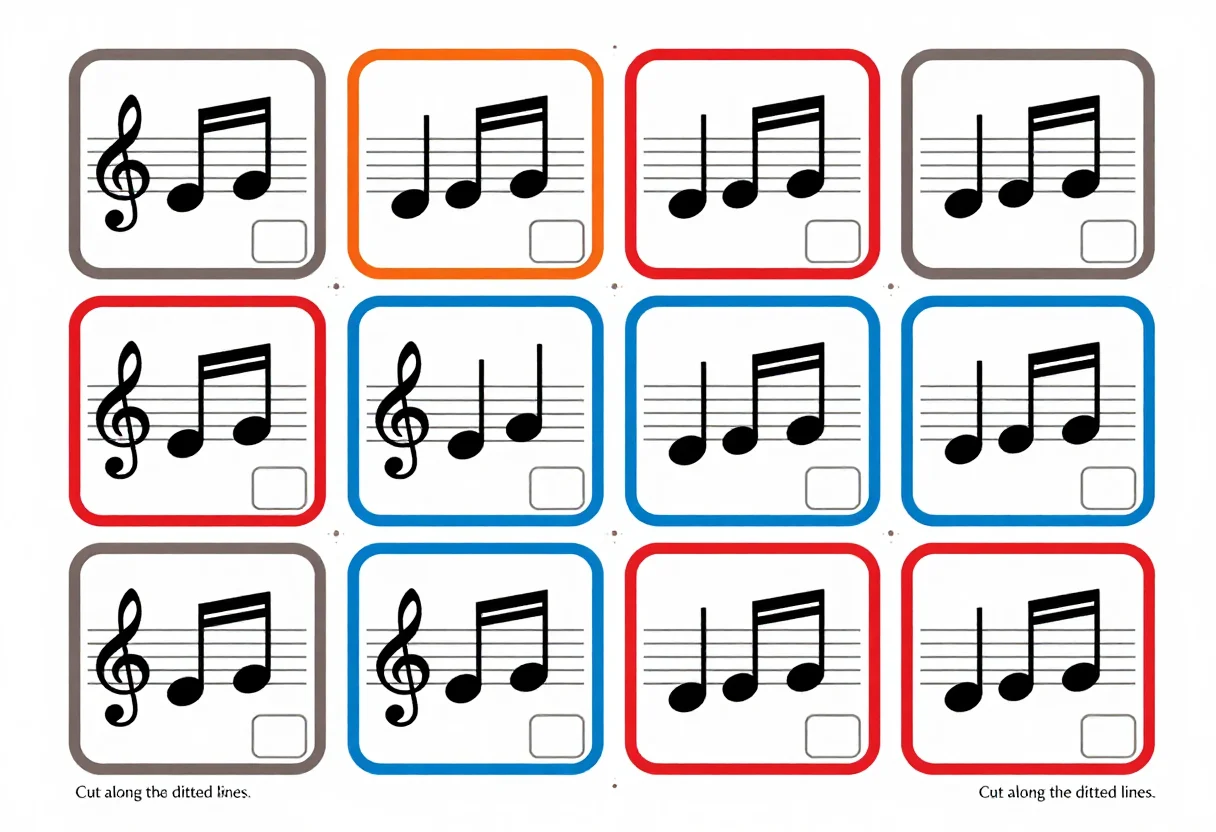
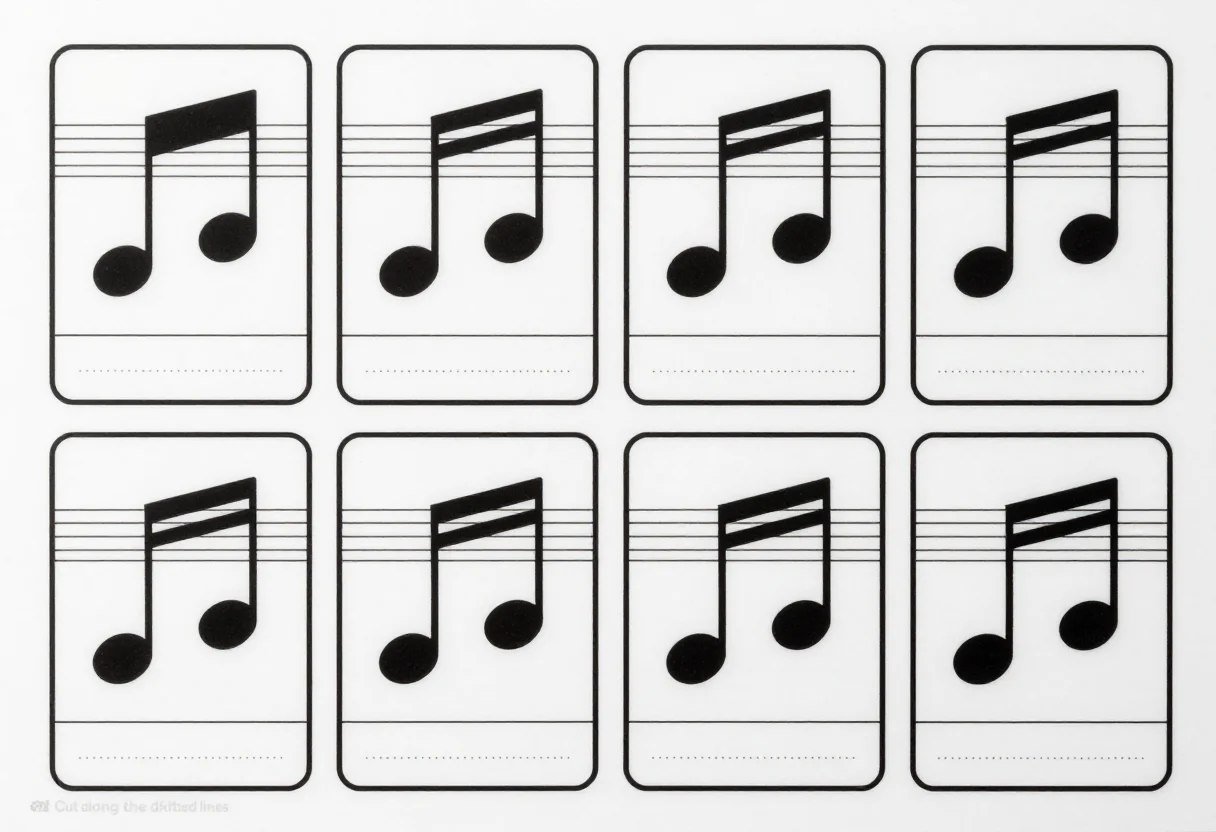
The note flashcard is elementary music's staple: a five-line staff with one note, a treble clef, cut eight to a sheet. Notation is exact throughout — the staff, the clefs, the note heads. These nine cover treble notes, bass notes, and note values. Type a different note range and the set redraws.
- music flash cards printable for note-reading practice
- a treble clef notes worksheet for a music lesson
- a bass clef flashcard set for piano students
- a note values activity for elementary music class
- a music center card set for individual practice
Frequently asked questions
- Is the musical notation accurate?
- Yes — the staff lines, clefs, and note placement are drawn with correct musical notation throughout, since this is a music pack.
- What's the difference between treble and bass clef sets?
- Two readings target the two clefs used in standard notation — treble clef (higher-pitched instruments and right hand piano) and bass clef (lower-pitched instruments and left hand piano).
- What are the note-value cards for?
- Cards showing different note durations (whole, half, quarter, eighth) rather than pitch — used to teach rhythm reading alongside pitch reading.
- How many cards are on a sheet?
- Eight cards per sheet, cut apart into individual flashcards.
About toile
This page is a showcase and a starting point: nine samples already rendered, three readings of the pack crossed with three styles, each shown at the size and ratio it was made for. Take any of them further on the wall with a few words, or ask for all nine again under your own direction; a sign-in keeps what you make, and it is free while Toile is new. The recipe behind each sample — the subject, the style, the palette, the framing — travels with the image rather than staying private to the render: it is in the alt text of every sample and in the page's own structured data, so a search engine reads the same handles a person would.