/nose-shape-charts · beauty
Nose shape charts: front, profile, contour
Make your ownNose shape charts
Describe yours. We'll remake the whole pack your way.
More like this
the whole catalog →
every sample — three subjects, three styles ↓
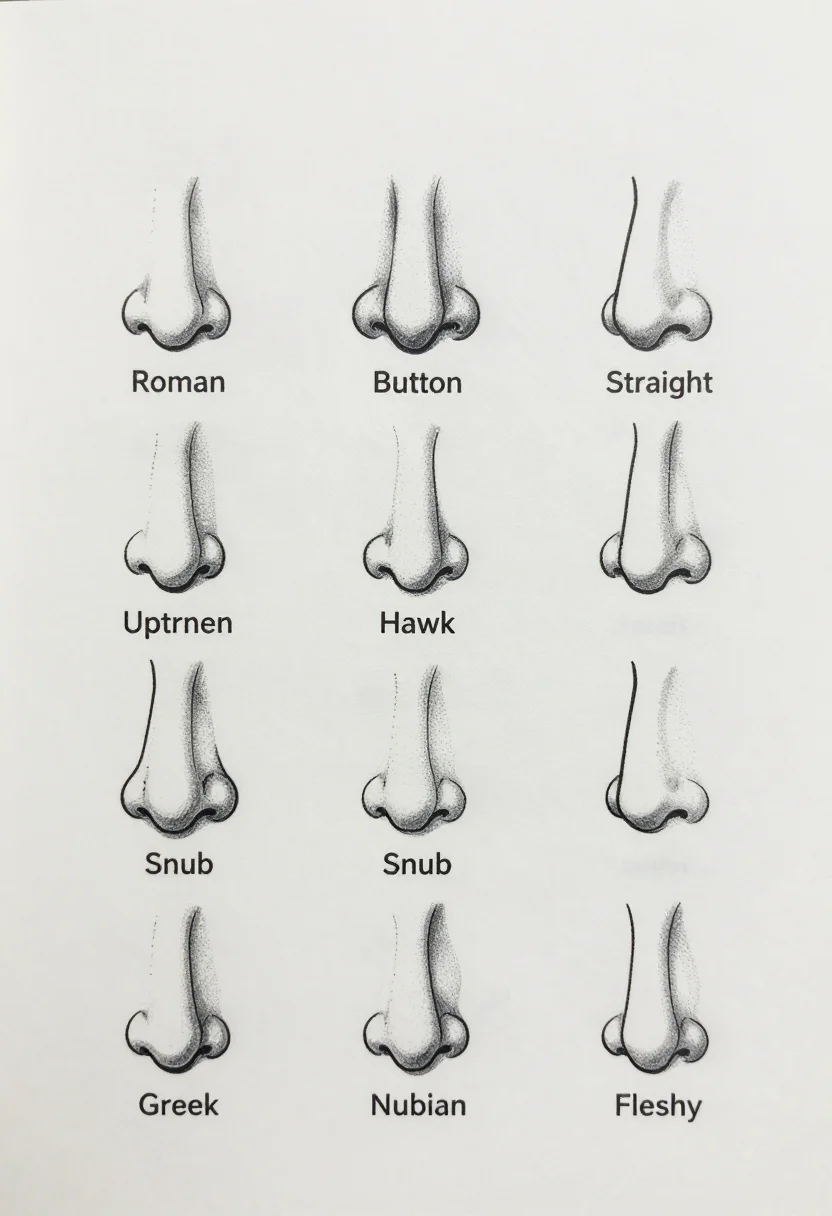
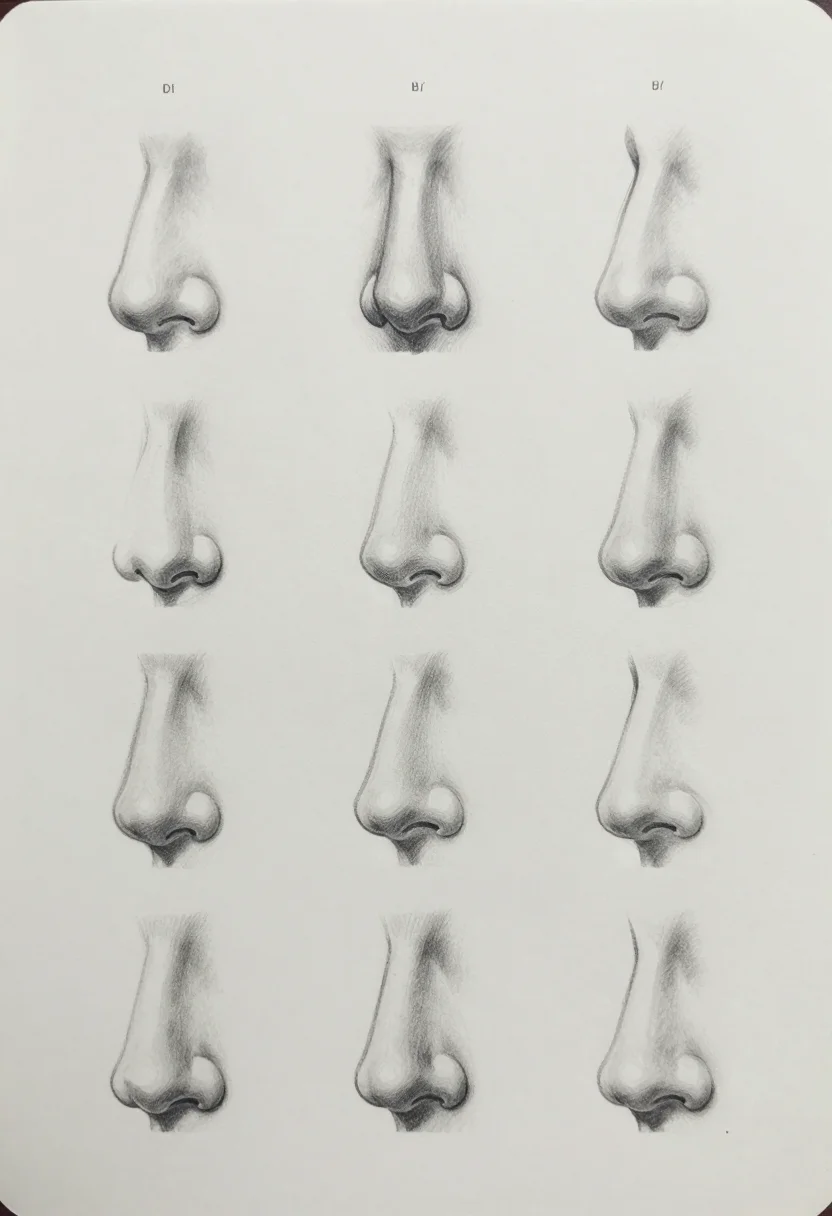
Nose shape charts name the common nose shapes and show them side by side. The front chart labels nine shapes: Roman, Button, Straight, Upturned, Hawk, Snub, Greek, Nubian and Fleshy. The profile chart labels six of them, and the contour chart shades where each shape is placed. Type a different view or a twist, such as nose piercings, three-quarter or animal noses, and the same drawing style carries it.
- a reference for a makeup artist's contour practice
- a drawing sheet for a portrait unit at school
- a handout for a face-drawing class
- a reference for a portrait or sculpture project
Frequently asked questions
- What is the difference between the three drawing styles?
- The line diagram is black ink outlines with fine stipple in shaded areas. The soft tint adds a flat beige wash and taupe shadows. The pencil study uses soft graphite shading on the bridge, the tip and the wings of each nose.
- What background do the pages use?
- Each page is drawn on plain white paper, with no photograph and no watermark.
- Can I ask for a different view?
- Yes. Type the view as a request, such as three-quarter. The picture is not promised to match it exactly.
About toile
This page is a showcase and a starting point: nine samples already rendered, three readings of the pack crossed with three styles, each shown at the size and ratio it was made for. Take any of them further on the wall with a few words, or ask for all nine again under your own direction; a sign-in keeps what you make, and it is free while Toile is new. The recipe behind each sample — the subject, the style, the palette, the framing — travels with the image rather than staying private to the render: it is in the alt text of every sample and in the page's own structured data, so a search engine reads the same handles a person would.