/pooja-room-designs · home
Pooja room designs: wall unit, jali door and marble mandir
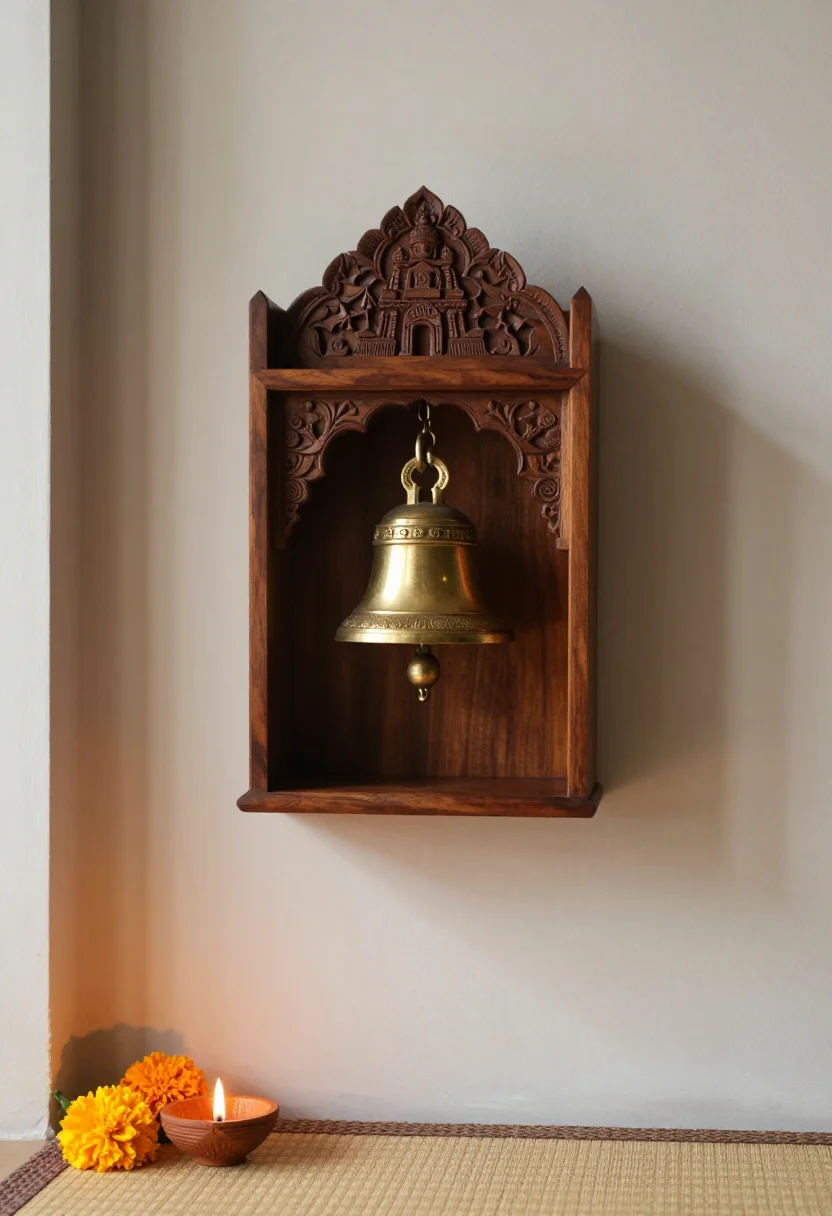
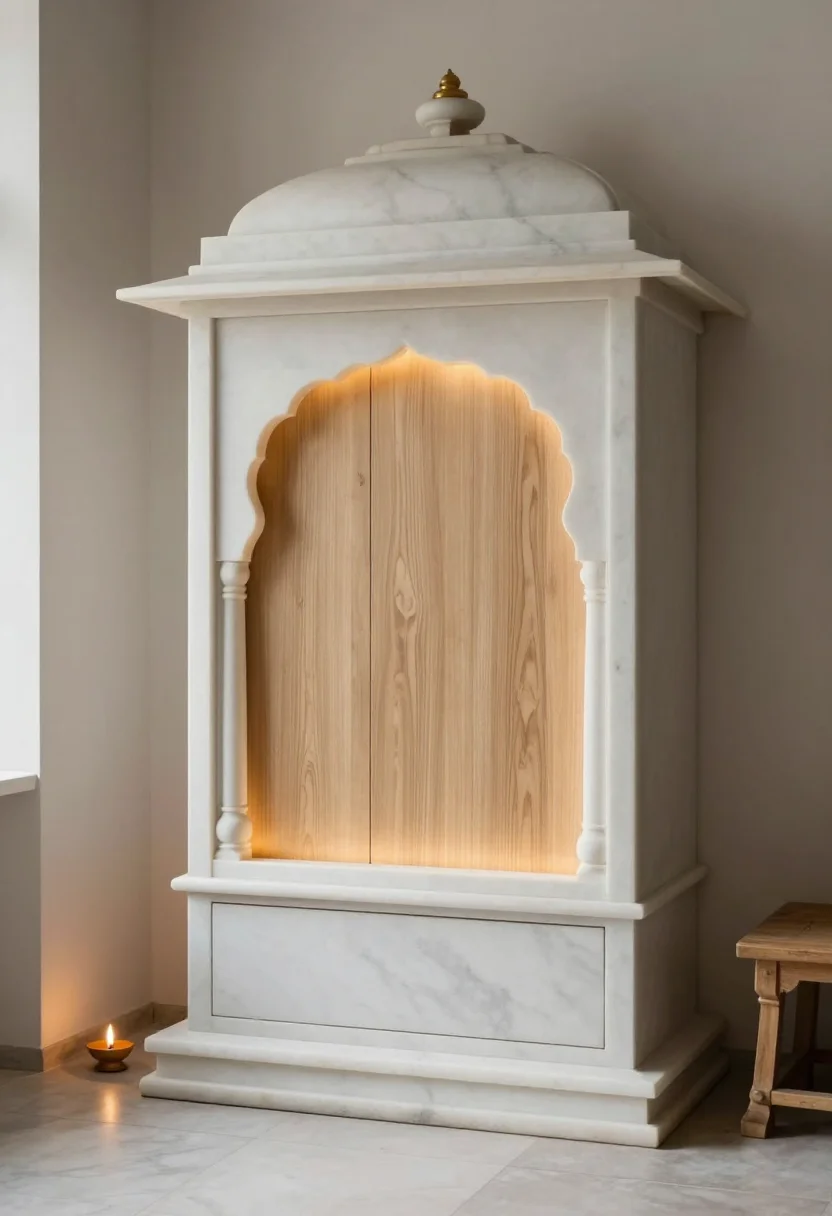
Make your ownPooja room designs
Describe yours. We'll remake the whole pack your way.
More like this
the whole catalog →
every sample — three subjects, three styles ↓
Three pooja designs for an Indian home: a small wall-mounted unit with a carved back and a bell, a room with carved jali doors and brass lamps, and a white marble mandir with a backlit panel. Each is shown in carved teak, in white and gold, and in light oak. Use them to brief a carpenter for a flat or a dedicated room. Type a different layout, such as a corner mandir, for a variation on the same designs.
- Briefing a carpenter on a home mandir
- A pooja unit for a small flat
- A pooja room with carved jali doors
- A marble mandir in a living room corner
Frequently asked questions
- What is the difference between the three finishes?
- Teak carved uses deep teak with hand-carved temple motifs and brass bells. White and gold uses white lacquer or stone with fine gold inlay lines. Modern minimal uses light oak and fluted panels with hidden drawers.
- Do the pictures show sizes?
- No. They show the look of each unit, with no dimensions or drawings. Measure your space and check the fit with your carpenter.
- Are these real installations?
- No. They are generated images styled to look like interior design photographs.
- Can I ask for a corner mandir?
- Yes. Type it as a direction. The result is a variation on the same designs, not a guaranteed match.
About toile
This page is a showcase and a starting point: nine samples already rendered, three readings of the pack crossed with three styles, each shown at the size and ratio it was made for. Take any of them further on the wall with a few words, or ask for all nine again under your own direction; a sign-in keeps what you make, and it is free while Toile is new. The recipe behind each sample — the subject, the style, the palette, the framing — travels with the image rather than staying private to the render: it is in the alt text of every sample and in the page's own structured data, so a search engine reads the same handles a person would.