/potion-cards · tabletop
Potion cards: healing potion, card sheet, blank potion card
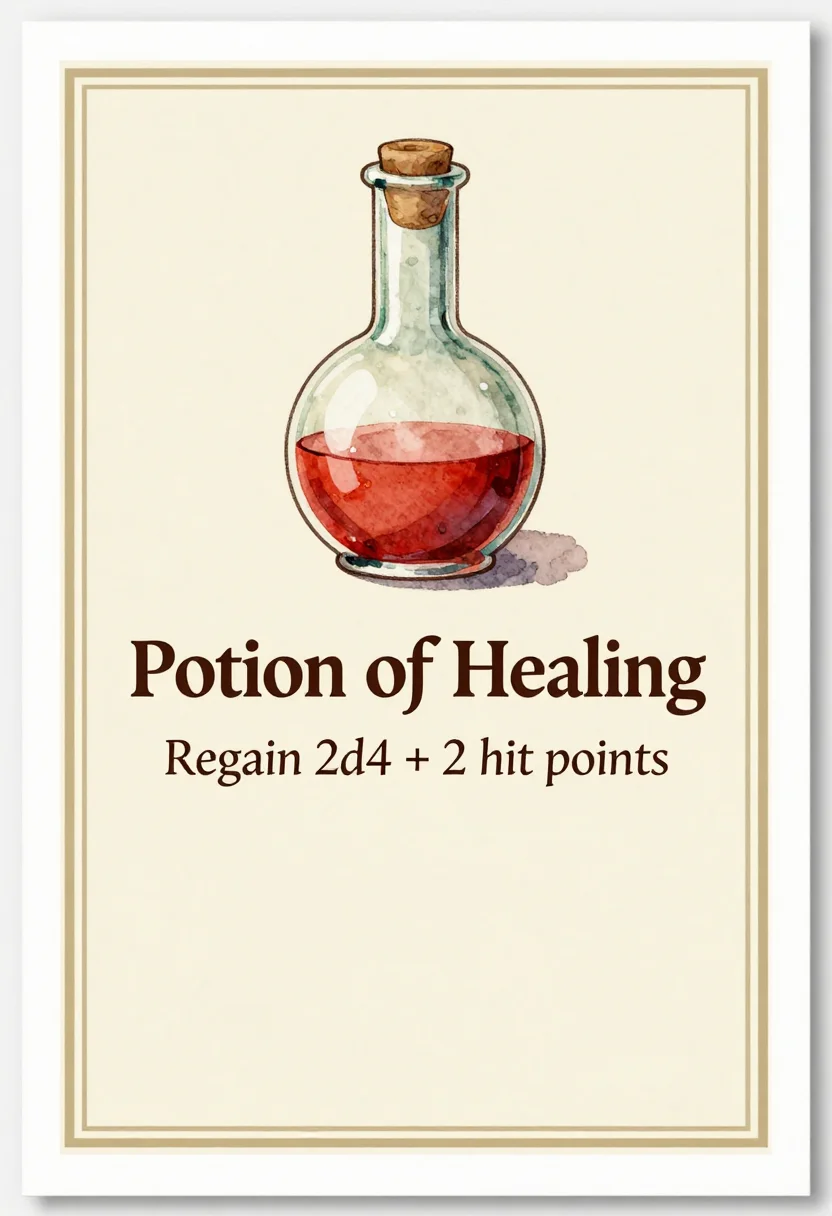
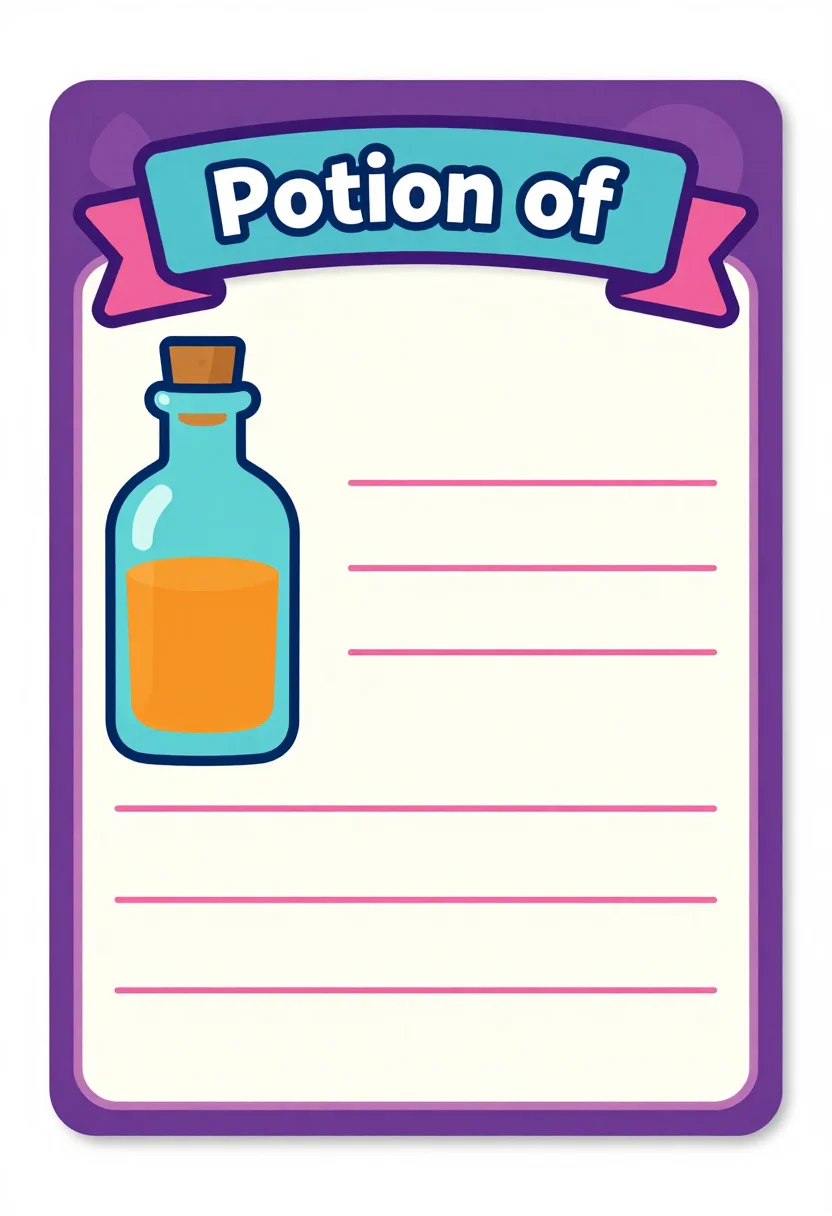
Make your ownPotion cards
Describe yours. We'll remake the whole pack your way.
More like this
the whole catalog →
every sample — three subjects, three styles ↓
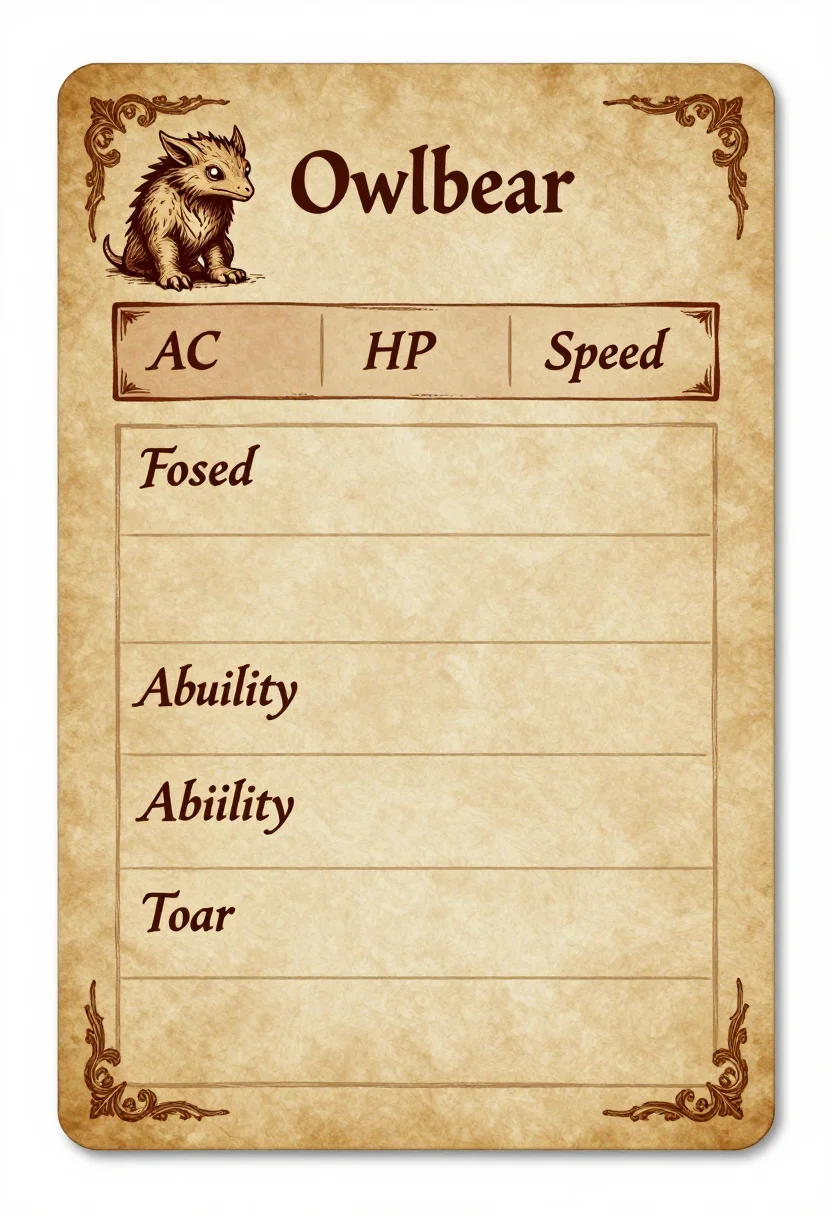
Potion cards tell the party what a potion holds and how much it heals, handed over when one is found. This pack shows a healing potion card, a sheet of six small potion cards to cut apart, and a blank card with a ruled line for the effect. Each comes in apothecary, plain ink line or bright candy style. Type a different potion, such as poison or mana, and the layout keeps its space for name and effect.
- a reward handed over after a fight
- a sheet of small cards cut apart for a loot pile
- a blank card for a potion you design yourself
- a card kept with a character sheet
Frequently asked questions
- What do the nine pictures show?
- Three readings in three styles: a single healing potion card, a sheet of six small potion cards, and a blank potion card with three ruled lines for the effect.
- Is there room to write on the blank card?
- Yes. It has a bottle outline, a title ribbon headed Potion of, and three ruled lines for the effect.
- Can I ask for a different potion?
- Yes. Type a potion such as poison or mana; the result is a request, not a promised picture, and the layout stays the same.
- What is the difference between the styles?
- Apothecary is a cream label with watercolour glass bottles. Ink line is black on white with no fills. Candy bright is flat, chunky and colourful.
About toile
This page is a showcase and a starting point: nine samples already rendered, three readings of the pack crossed with three styles, each shown at the size and ratio it was made for. Take any of them further on the wall with a few words, or ask for all nine again under your own direction; a sign-in keeps what you make, and it is free while Toile is new. The recipe behind each sample — the subject, the style, the palette, the framing — travels with the image rather than staying private to the render: it is in the alt text of every sample and in the page's own structured data, so a search engine reads the same handles a person would.