/potty-training-charts · classroom
Potty training chart: sticker path, weekly grid, potty steps
Make your ownPotty training charts
Describe yours. We'll remake the whole pack your way.
More like this
the whole catalog →
every sample — three subjects, three styles ↓
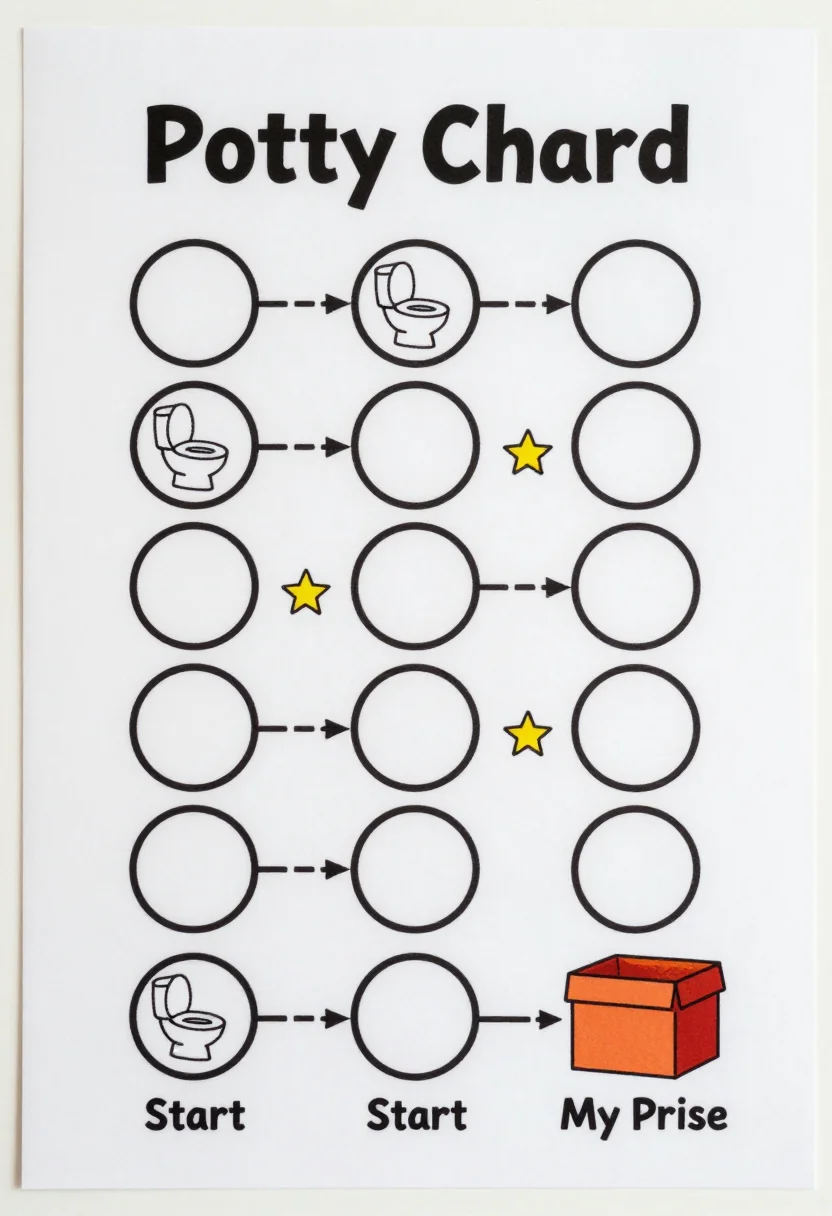
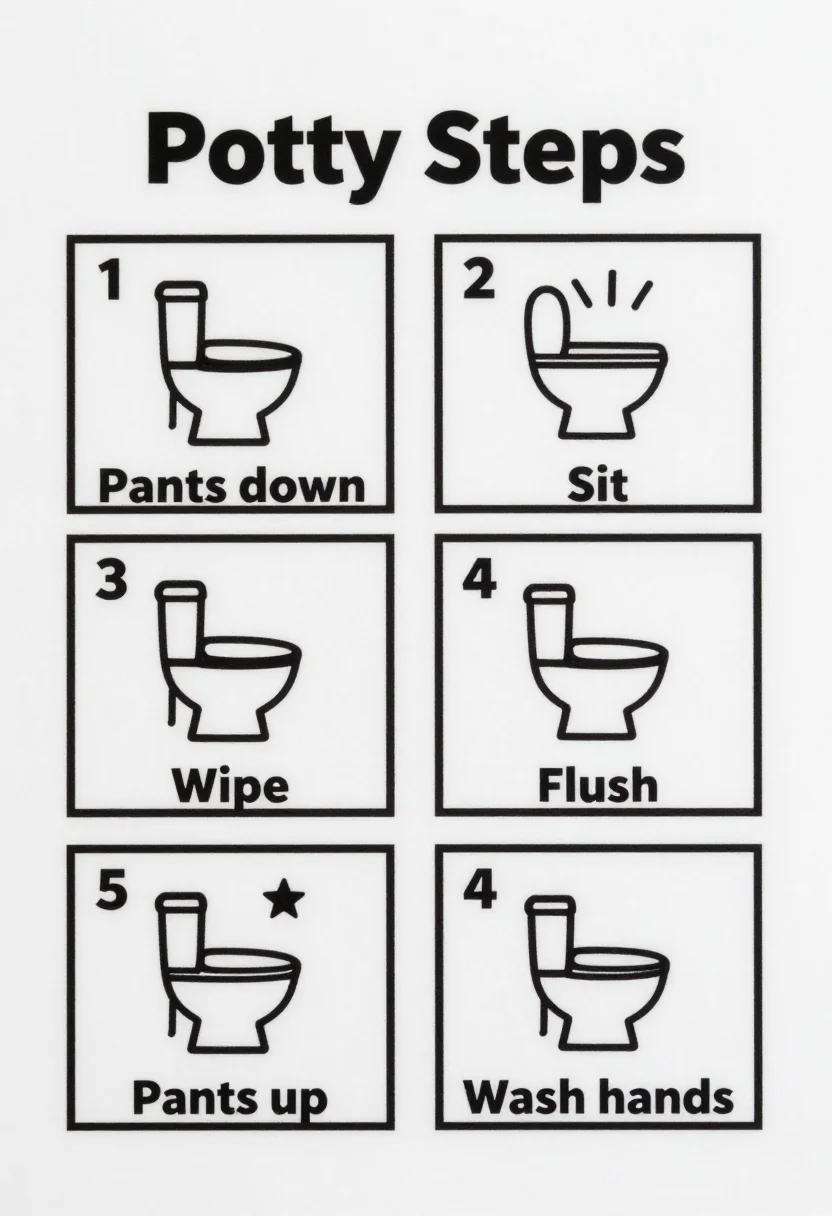
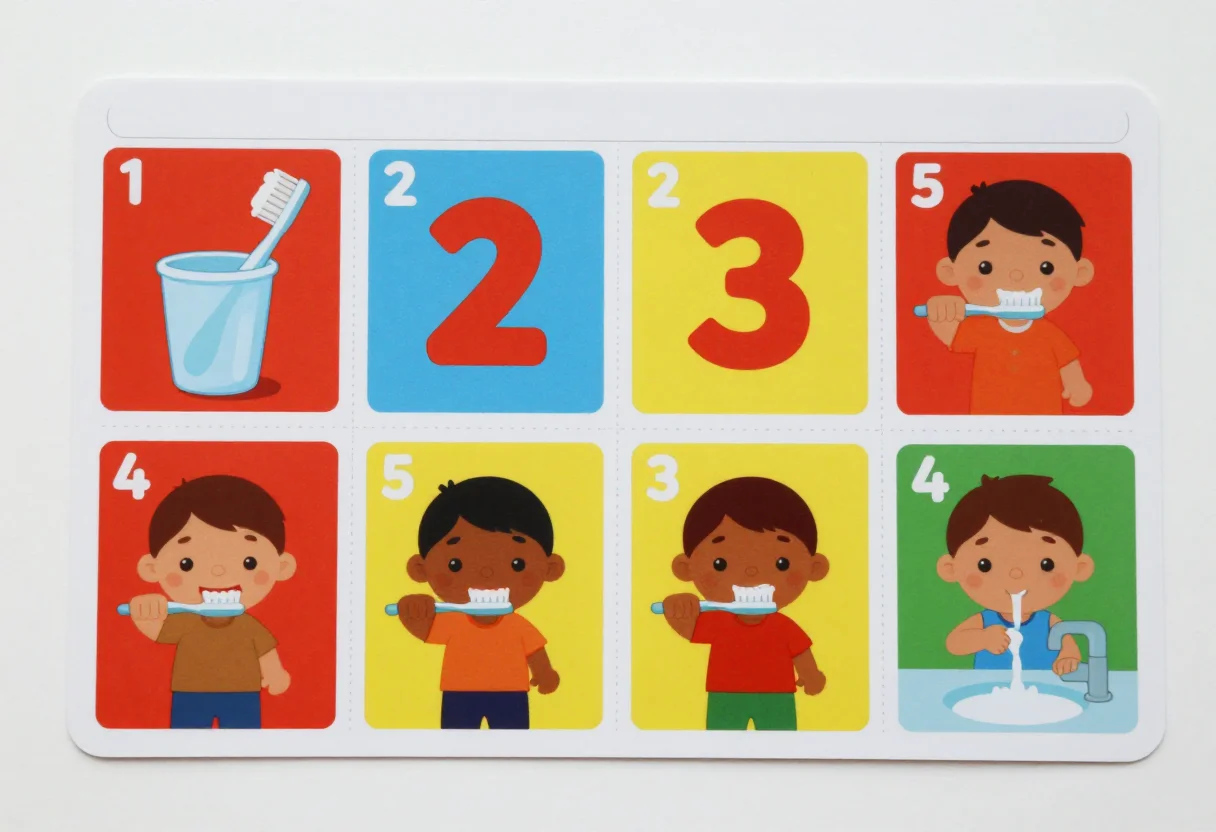
A printable potty training chart for a toddler to see progress. Tape it by the toilet and the child adds a sticker each time they try. The three charts are a sticker path of twenty circles ending in a prize box, a seven-day grid of tries with rows for wee and poo, and a six-step potty routine card. Each comes in three styles. Ask for a different theme, such as superhero stickers, and the charts are drawn to that request.
- taped beside a toilet at home
- a bathroom wall in a nursery or preschool
- a handout for parents starting potty training
Frequently asked questions
- What is on the page?
- Three charts: a sticker path of twenty circles to a prize box, a seven-day grid of tries, and a six-step potty routine card.
- Is it printable at home?
- Yes. Each is a flat portrait page with a clear margin and empty squares for stickers.
- What is the difference between the styles?
- Crayon fun has chunky hand-drawn outlines in bright colours, soft pastel is a calm flat chart in mint, peach and yellow, and black and white is a plain outline with nothing filled.
- Can I ask for a different theme?
- Yes. A theme such as superhero or dinosaur stickers can be asked for, and the charts are drawn to that request.
About toile
This page is a showcase and a starting point: nine samples already rendered, three readings of the pack crossed with three styles, each shown at the size and ratio it was made for. Take any of them further on the wall with a few words, or ask for all nine again under your own direction; a sign-in keeps what you make, and it is free while Toile is new. The recipe behind each sample — the subject, the style, the palette, the framing — travels with the image rather than staying private to the render: it is in the alt text of every sample and in the page's own structured data, so a search engine reads the same handles a person would.