/romanticism · style
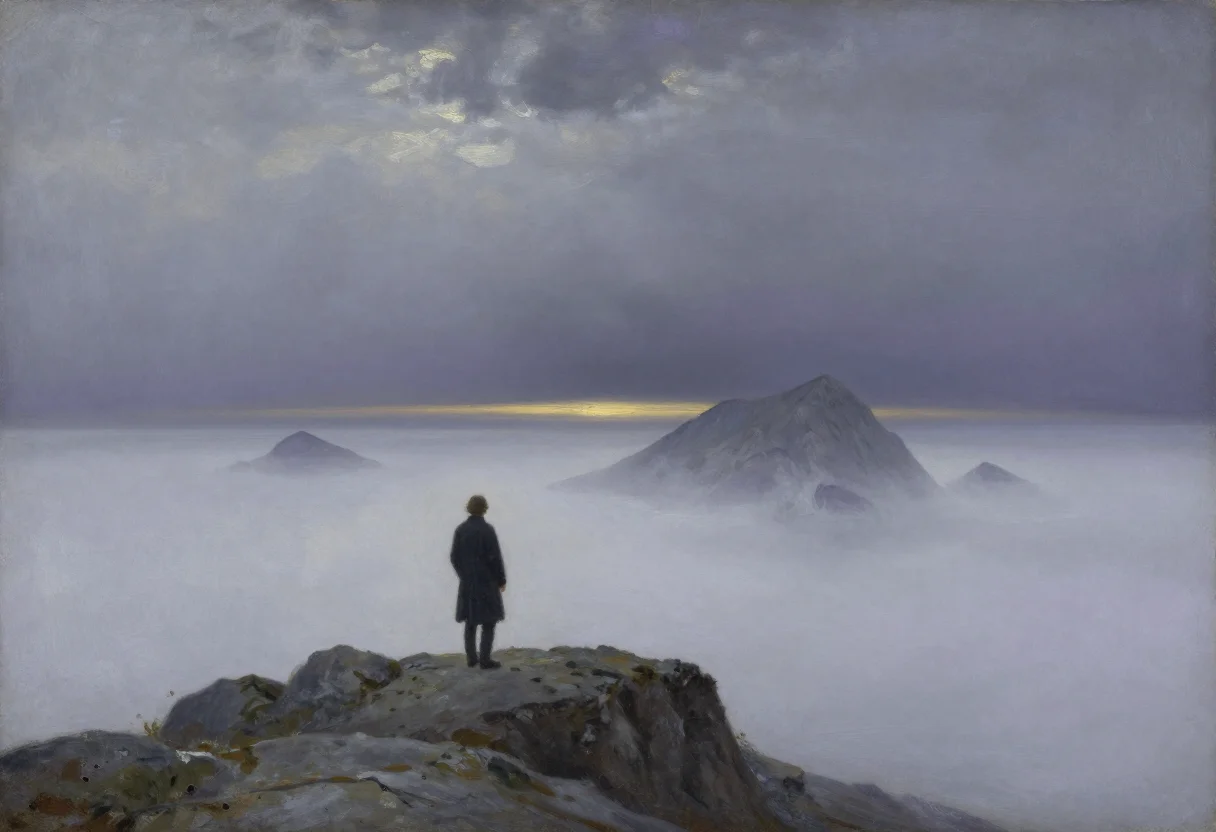
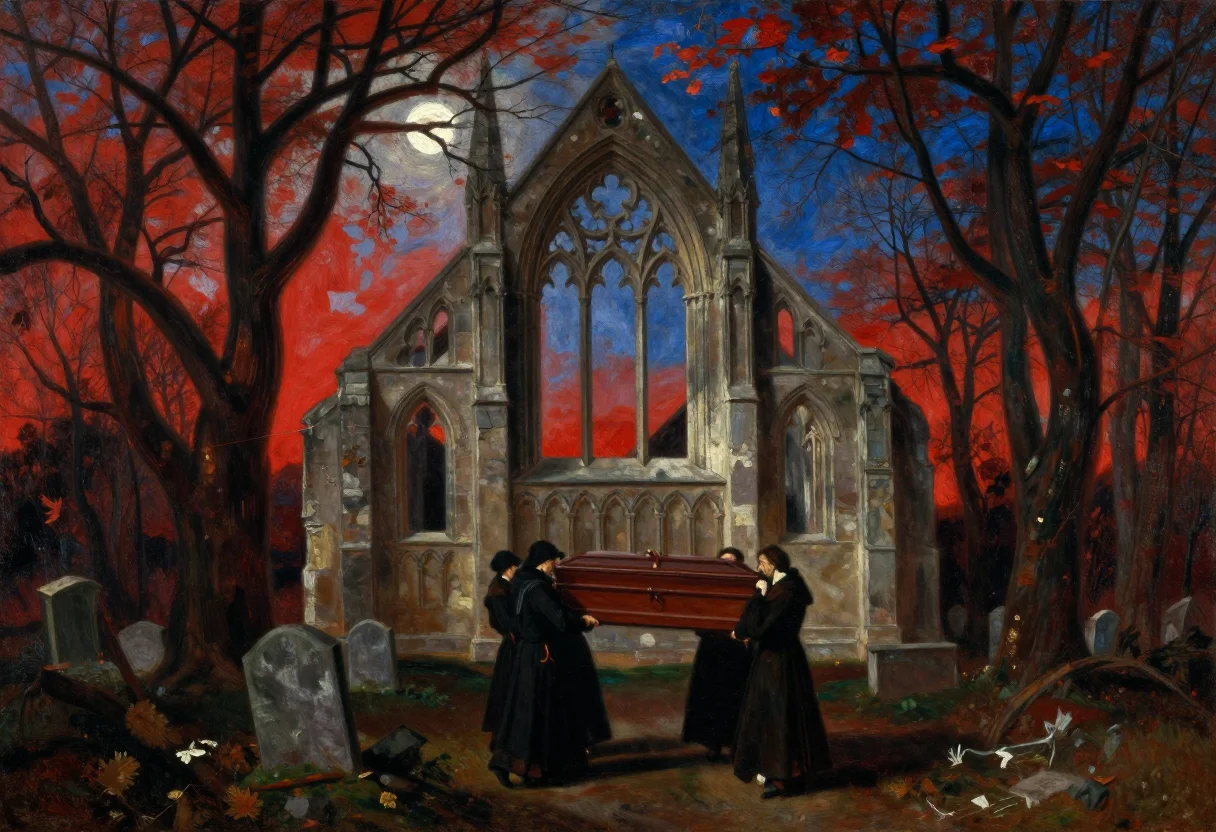
Romantic landscape art: a wanderer, a ship in ice and a moonlit abbey
Make your ownRomanticism
Describe yours. We'll remake the whole pack your way.
More like this
the whole catalog →

every sample — three subjects, three styles ↓
Romanticism paints the sublime over the human — a small figure set against vast, indifferent weather. These nine cross a wanderer above a sea of fog, a ship crushed in polar ice and a moonlit ruined abbey, rendered in the hands of Caspar David Friedrich, J. M. W. Turner and Eugène Delacroix. Type your own landscape and the same awe and scale take it.
- a landscape print for a study or hallway
- reference art for a moody nature print
- a seasonal landscape (winter, storm) reprint
- a gift print in a painterly, atmospheric register
Frequently asked questions
- What size do these print at?
- Each image is drawn in landscape format (1216×832) with an even margin — prints clean on A4 held horizontally.
- Can I use my own subject instead of the three shown?
- Yes — that's what the direction field on the page is for. Type your own idea and the same three hands draw it in the same three styles.
- Can I get a lighthouse or a volcano instead?
- Yes — type your own landscape (a lighthouse in a storm is the built-in example) and the same three painters' hands render it at the same scale.
- Is this real historical artwork, or new images?
- These are new images drawn in the spirit of Caspar David Friedrich's still atmosphere, J. M. W. Turner's dissolving light and Eugène Delacroix's diagonal energy — not scans or reproductions of existing work.
About toile
This page is a showcase and a starting point: nine samples already rendered, three readings of the pack crossed with three styles, each shown at the size and ratio it was made for. Take any of them further on the wall with a few words, or ask for all nine again under your own direction; a sign-in keeps what you make, and it is free while Toile is new. The recipe behind each sample — the subject, the style, the palette, the framing — travels with the image rather than staying private to the render: it is in the alt text of every sample and in the page's own structured data, so a search engine reads the same handles a person would.