/socialist-realism · style
Socialist realism: the worker, the harvest at dawn, the parade
Make your ownSocialist realism
Describe yours. We'll remake the whole pack your way.
More like this
the whole catalog →
every sample — three subjects, three styles ↓
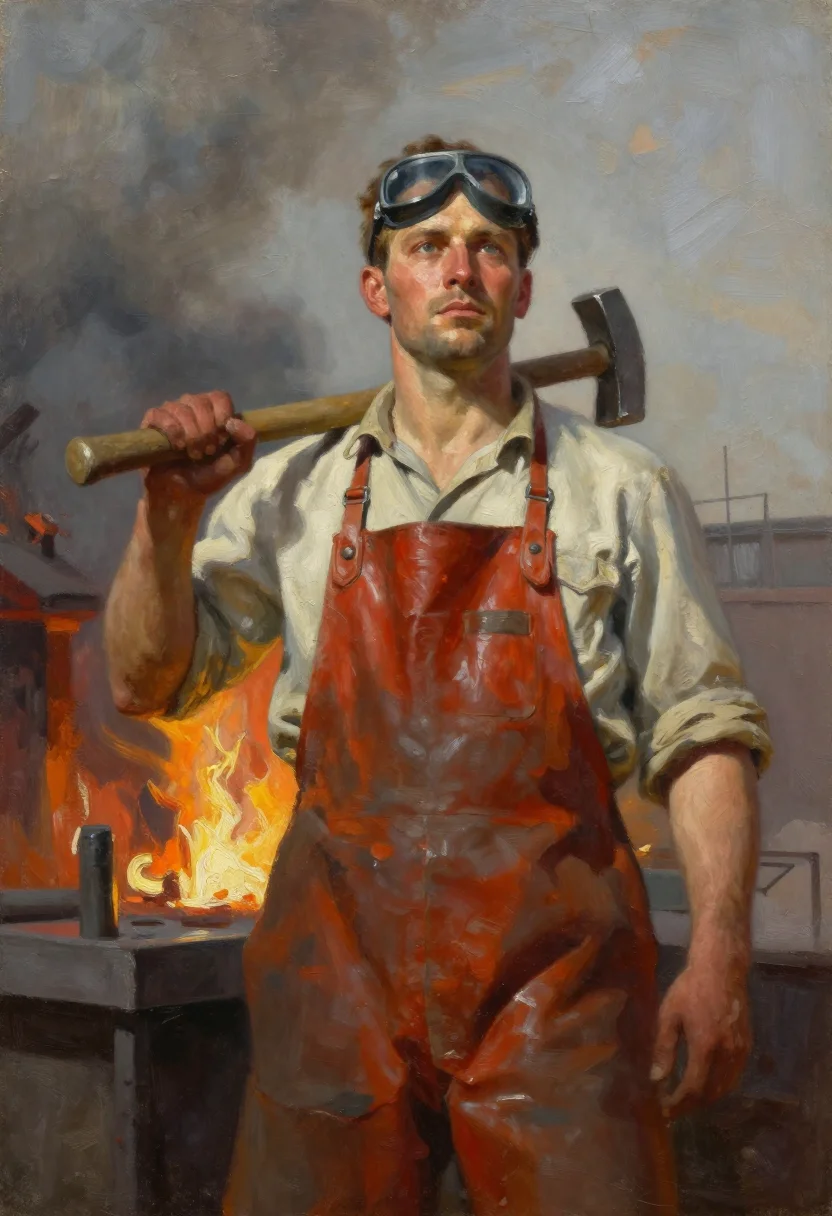
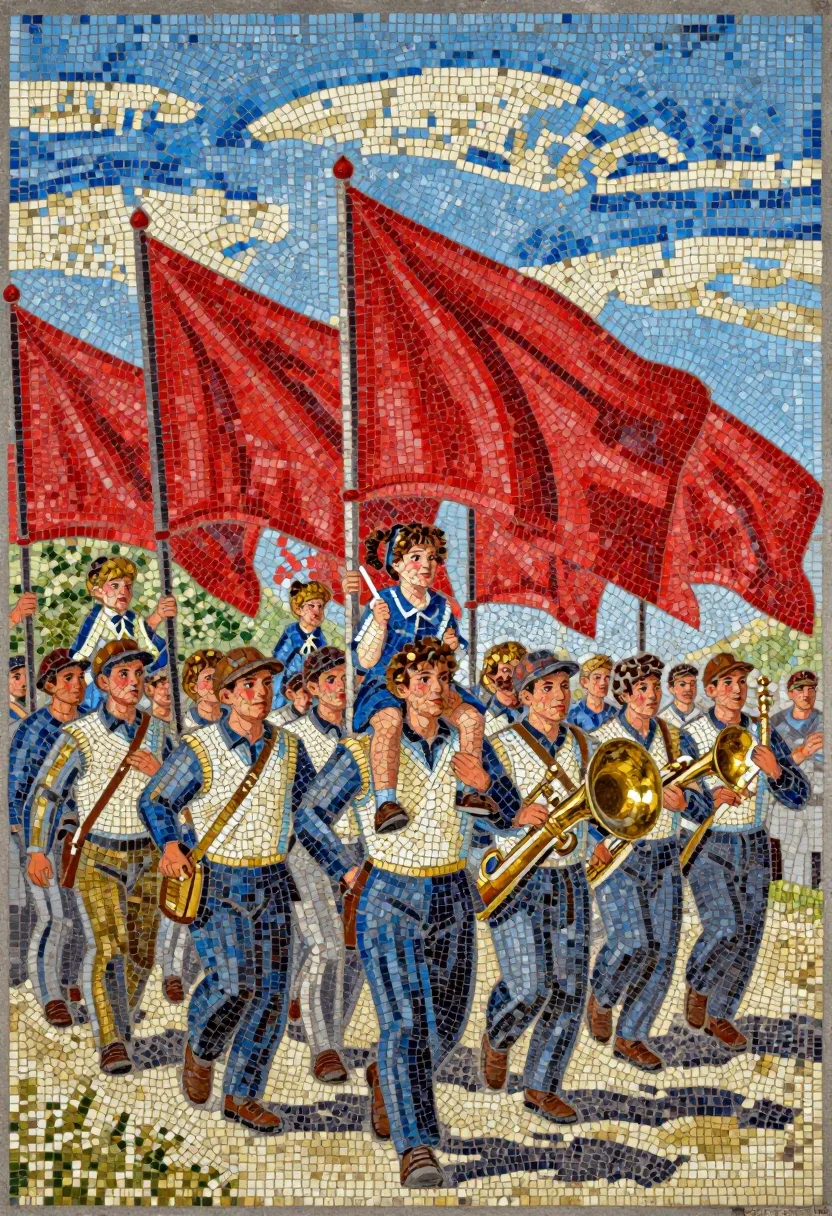
Socialist realism is the heroic poster and the academic canvas: a worker looking past the horizon, a tractor at dawn, a crowd with flags rendered with total conviction — red, ochre, steel grey. These nine render the worker, the harvest at dawn and the parade, each across three finishes — academic oil, propaganda poster, and mosaic. Ask for a cosmonaut instead, a fisherman at sea, or deep winter — the same three finishes carry it.
- a history classroom or museum-style display
- a poster or fine-art print
- a retro-themed office or studio wall
- a book cover or editorial illustration reference
- a mid-century propaganda-art collection piece
Frequently asked questions
- What size do these print at?
- Each render is composed as a bold single-figure or crowd panel — suited to a poster or a large print.
- Can I get a different scene, like a cosmonaut or winter setting?
- Yes — the direction field takes any subject, and the same three finishes render it.
- What's the difference between the three finishes?
- Academic oil is fully painted and modelled; propaganda poster flattens it into bold graphic colour and slogans-free composition; mosaic breaks the image into tessellated tile.
- Is this a reproduction of a real Soviet-era artwork?
- No — it's an original rendered image in the register of the movement, no historical artwork is copied.
About toile
This page is a showcase and a starting point: nine samples already rendered, three readings of the pack crossed with three styles, each shown at the size and ratio it was made for. Take any of them further on the wall with a few words, or ask for all nine again under your own direction; a sign-in keeps what you make, and it is free while Toile is new. The recipe behind each sample — the subject, the style, the palette, the framing — travels with the image rather than staying private to the render: it is in the alt text of every sample and in the page's own structured data, so a search engine reads the same handles a person would.