/secret-code-sheets · tabletop
Secret code sheets: pigpen key, Morse code chart, decoder sheet
Make your ownSecret code sheets
Describe yours. We'll remake the whole pack your way.
More like this
the whole catalog →
every sample — three subjects, three styles ↓
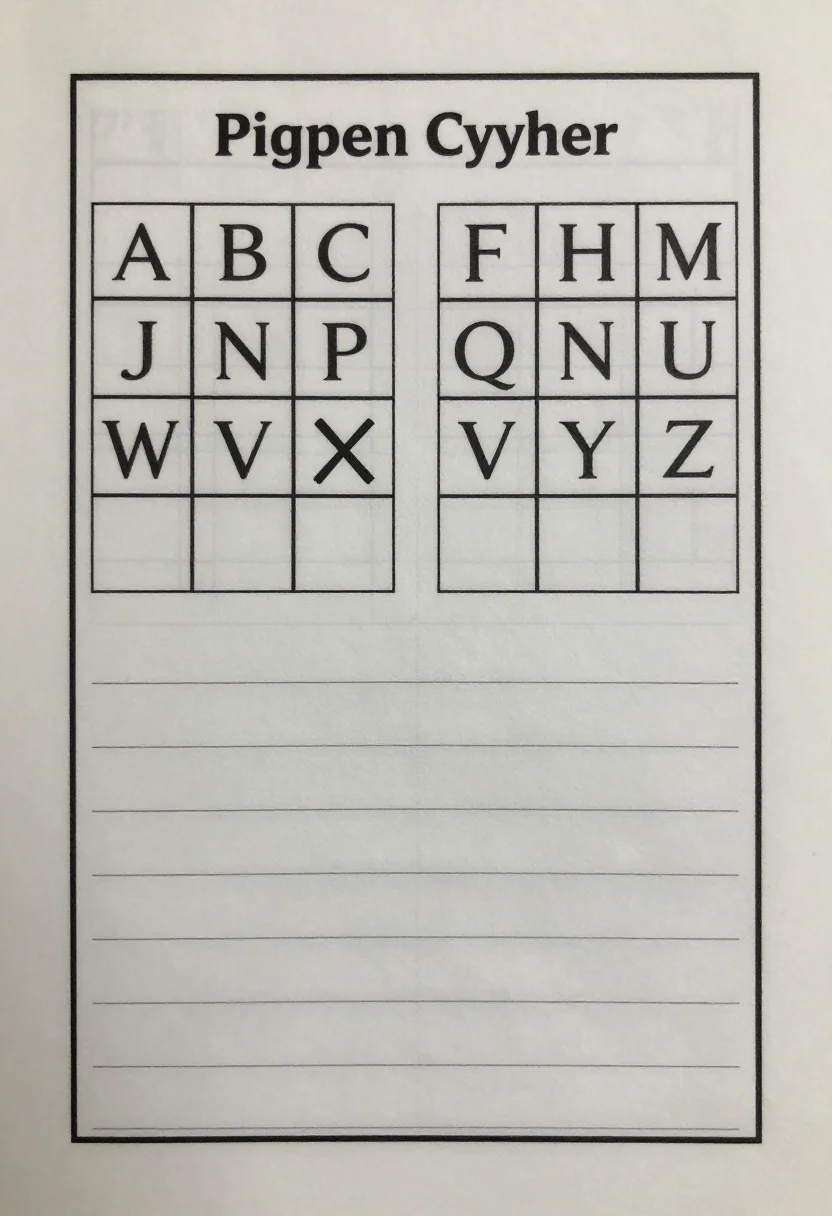
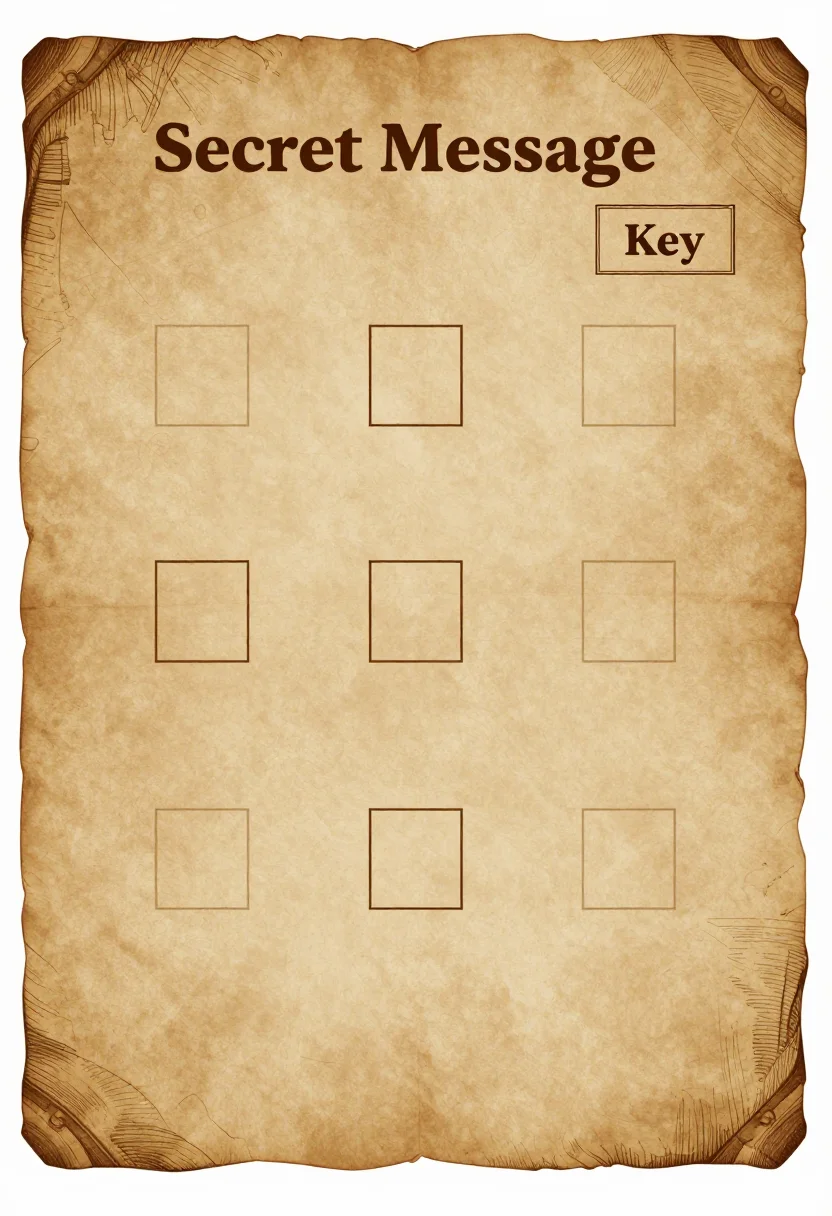
Secret code sheets are for writing and cracking secret messages, a classroom favourite and a treasure-hunt staple. This pack shows a pigpen cipher key, a Morse code chart with a practice line, and a blank decoder sheet with three rows of letter boxes. Each comes as a spy dossier, a kids puzzle page or a treasure-map parchment. Type a theme, such as pirate or red ink, and the sheet keeps its key and boxes.
- a classroom lesson on codes
- a treasure hunt with a written clue
- a message a child writes to a friend
- a key pinned up beside a puzzle
Frequently asked questions
- What is a pigpen cipher?
- A cipher in which each letter is drawn as a shape taken from two small grids and two X shapes; the key sheet shows which shape is which letter.
- How does the decoder sheet work?
- It has three rows of empty letter boxes, each with a blank symbol box above it, and a box marked Key in the corner for the key.
- Can I print the Morse chart?
- Yes. It lists A to Z in two columns, each letter with its dots and dashes, and a ruled line at the foot for practice.
About toile
This page is a showcase and a starting point: nine samples already rendered, three readings of the pack crossed with three styles, each shown at the size and ratio it was made for. Take any of them further on the wall with a few words, or ask for all nine again under your own direction; a sign-in keeps what you make, and it is free while Toile is new. The recipe behind each sample — the subject, the style, the palette, the framing — travels with the image rather than staying private to the render: it is in the alt text of every sample and in the page's own structured data, so a search engine reads the same handles a person would.