/spice-charts · home
Spice charts: spice grid, food pairings, classic blends
Make your ownSpice charts
Describe yours. We'll remake the whole pack your way.
More like this
the whole catalog →

every sample — three subjects, three styles ↓
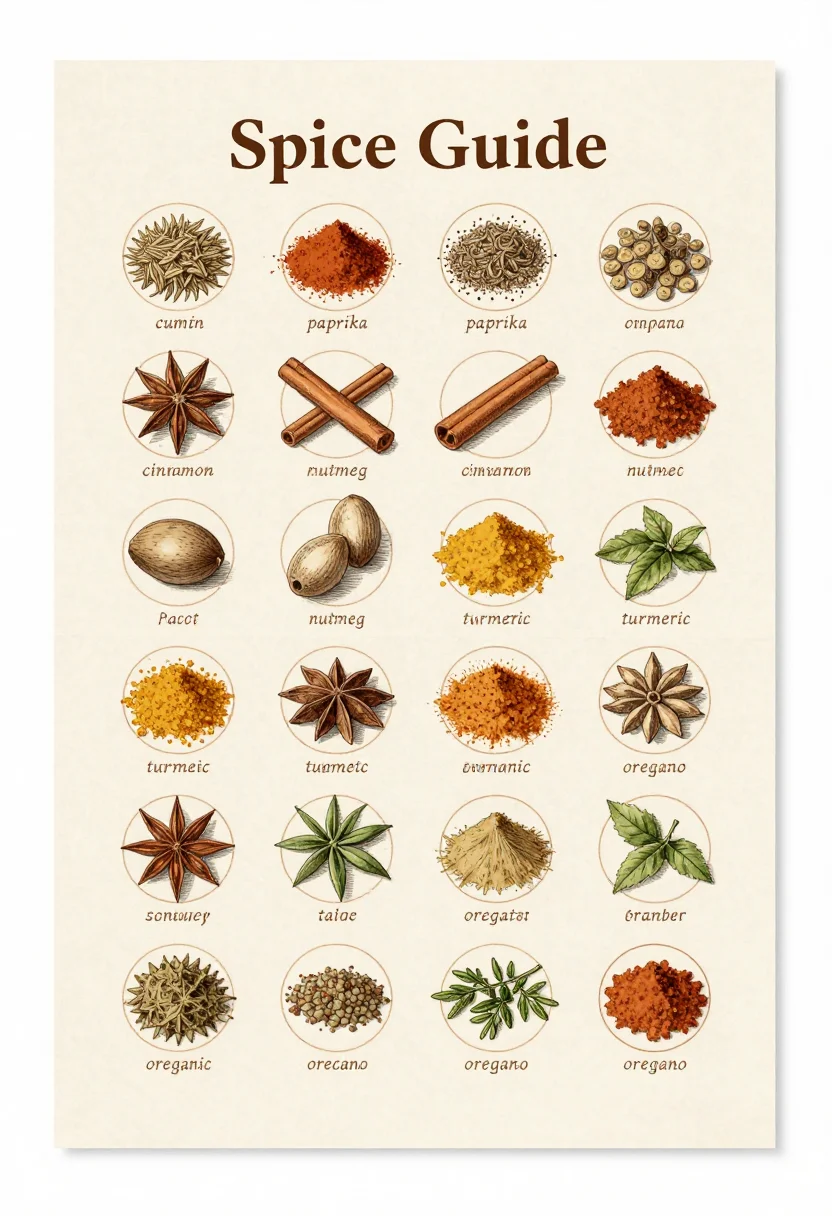
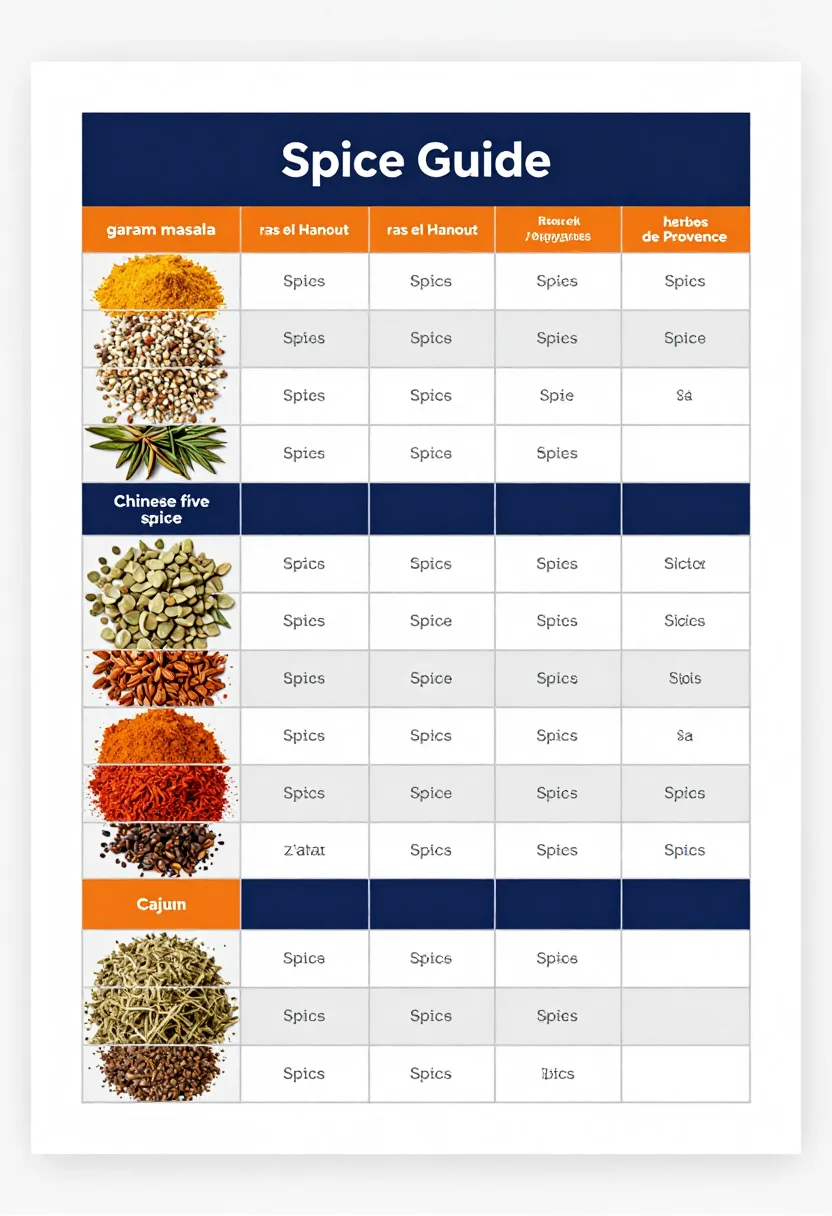
Spice charts to learn what each jar tastes like and what it goes with, or to label a spice drawer. The nine pictures show a grid of twenty common spices, a pairing chart of spices against chicken, beef, fish, vegetables and rice, and the classic blends of several kitchens, from garam masala to za'atar. Type a different subject, such as a spice drawer or hot spices, and the same three styles carry it.
- labels for a spice drawer
- a guide for a new cook
- a shelf card beside the jars
- a reference for a cookery class
Frequently asked questions
- Which spices are on the grid?
- Twenty common spices, each drawn in a circle with its name below, including cumin, paprika, cinnamon, nutmeg, turmeric and oregano.
- Does the pairing chart cover every dish?
- It covers chicken, beef, fish, vegetables and rice, with a dot where a spice works with that food.
- Which blends are named?
- Garam masala, ras el hanout, herbes de Provence, Chinese five spice, za'atar and Cajun seasoning.
- What is the difference between the styles?
- Botanical plate is engraved ink on aged cream, kraft stamp is brown ink on kraft paper, and infographic is a clean navy and orange chart.
About toile
This page is a showcase and a starting point: nine samples already rendered, three readings of the pack crossed with three styles, each shown at the size and ratio it was made for. Take any of them further on the wall with a few words, or ask for all nine again under your own direction; a sign-in keeps what you make, and it is free while Toile is new. The recipe behind each sample — the subject, the style, the palette, the framing — travels with the image rather than staying private to the render: it is in the alt text of every sample and in the page's own structured data, so a search engine reads the same handles a person would.