/spirit-week-posters · season
Spirit week posters: schedule, blank template, class points
Make your ownSpirit week posters
Describe yours. We'll remake the whole pack your way.
More like this
the whole catalog →

every sample — three subjects, three styles ↓
Printable boards for homecoming week: a filled schedule of dress-up days, a blank five-day template to fill in, and a points board that keeps score between the four classes. Ruled rows and boxes keep the day names in line. Type a different theme, such as decades day, a version for teachers or dark mode, and the same grid holds the new days.
- a hallway schedule announcing the dress-up days
- a blank template for writing this week's themes
- a class points board for the grade competition
- a teacher's door display during homecoming week
Frequently asked questions
- Which days does the filled schedule show?
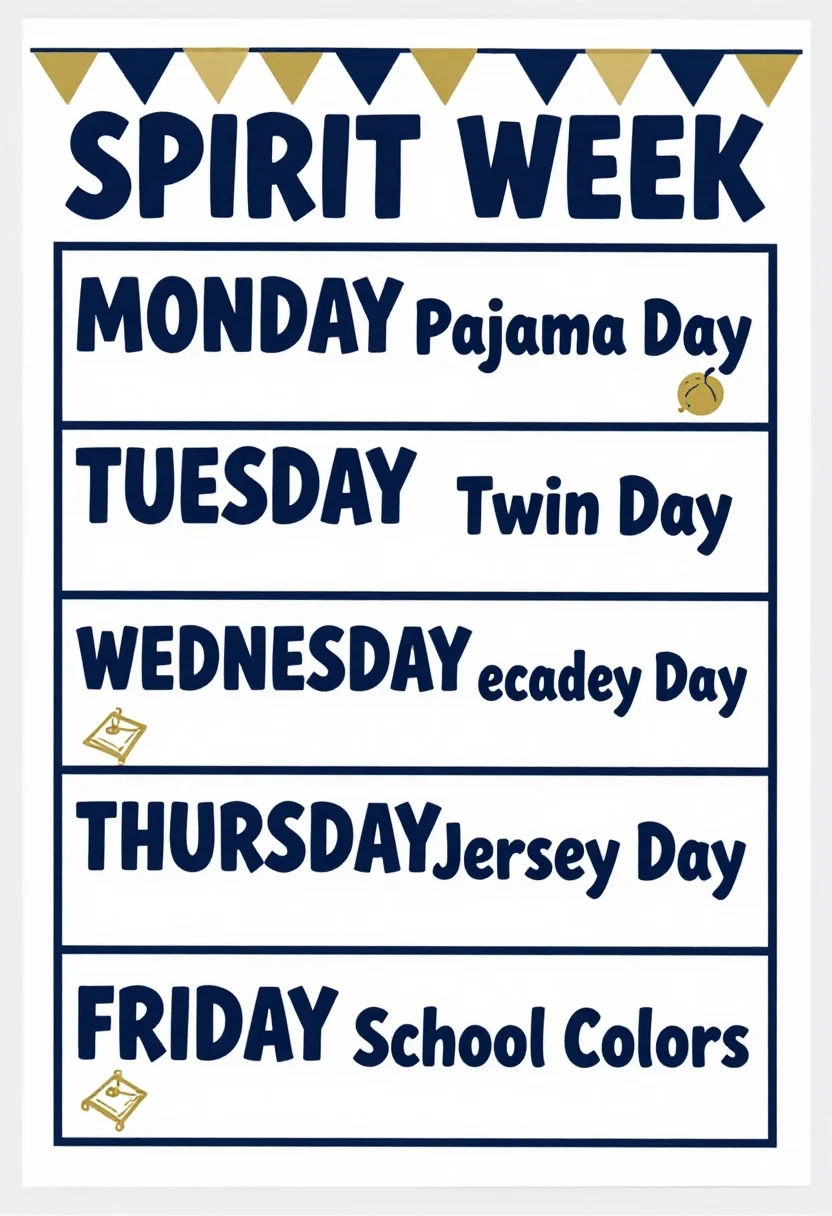
- Five days: Pajama Day, Twin Day, Decades Day, Jersey Day and School Colors, each with a small icon.
- Can I use the blank template for my own themes?
- Yes. Each of the five boxes has two ruled lines for the theme, so you can write your own days in.
- What is on the points board?
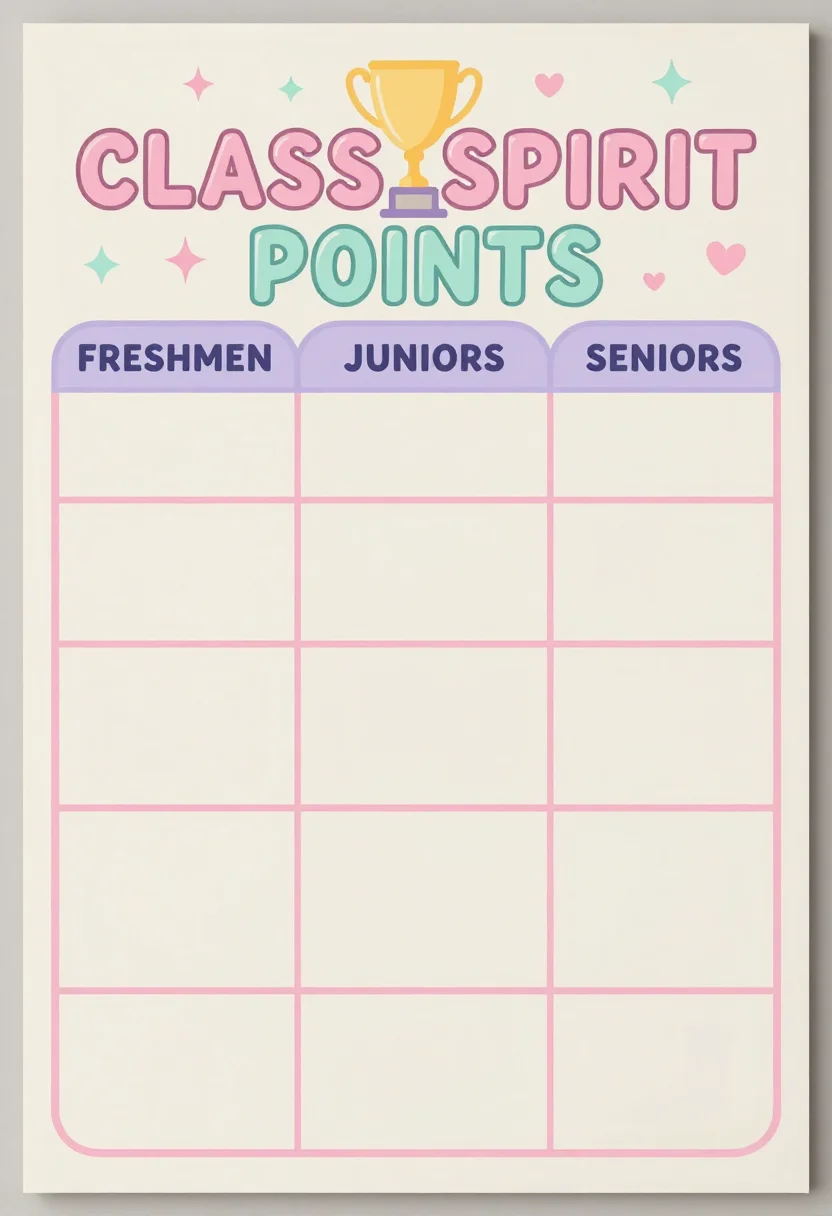
- Four class columns, Freshmen, Sophomores, Juniors and Seniors, with five empty rows for the days and a trophy at the top.
- How do the three styles differ?
- Bold lettering uses school-color blue and gold on white; chalkboard uses white chalk on dark green; pastel print uses soft pink, mint and lavender on cream with rounded boxes.
About toile
This page is a showcase and a starting point: nine samples already rendered, three readings of the pack crossed with three styles, each shown at the size and ratio it was made for. Take any of them further on the wall with a few words, or ask for all nine again under your own direction; a sign-in keeps what you make, and it is free while Toile is new. The recipe behind each sample — the subject, the style, the palette, the framing — travels with the image rather than staying private to the render: it is in the alt text of every sample and in the page's own structured data, so a search engine reads the same handles a person would.