/treasure-maps · tabletop
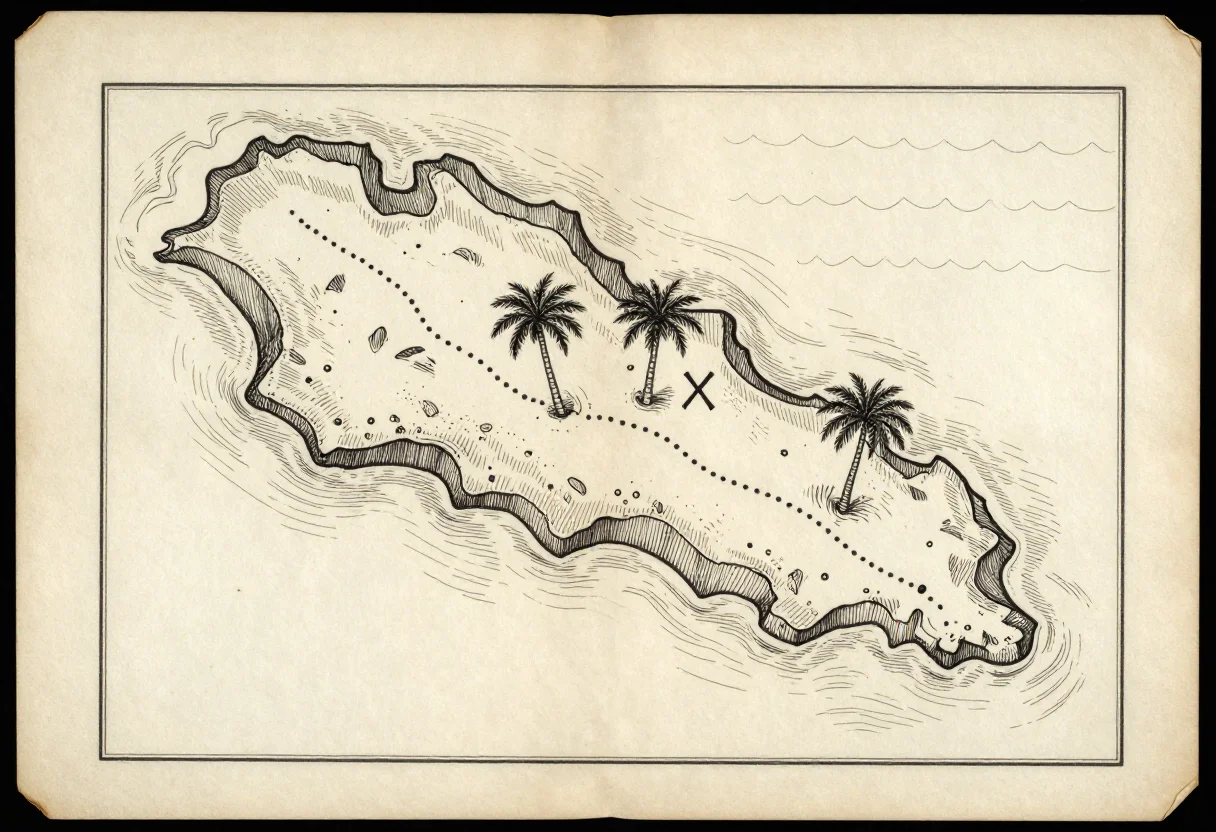
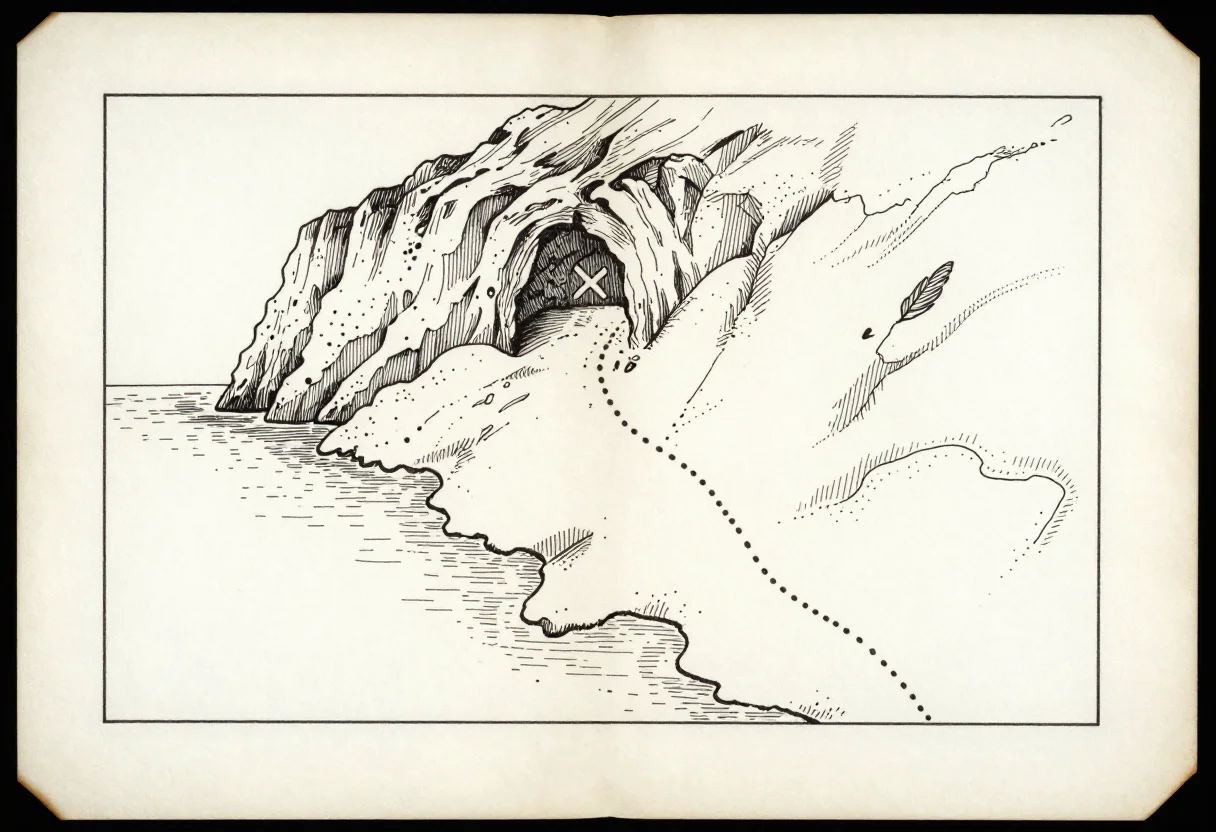
Treasure map: island, sea chart and cliff cave in three styles
Make your ownTreasure maps
Describe yours. We'll remake the whole pack your way.
More like this
the whole catalog →
every sample — three subjects, three styles ↓
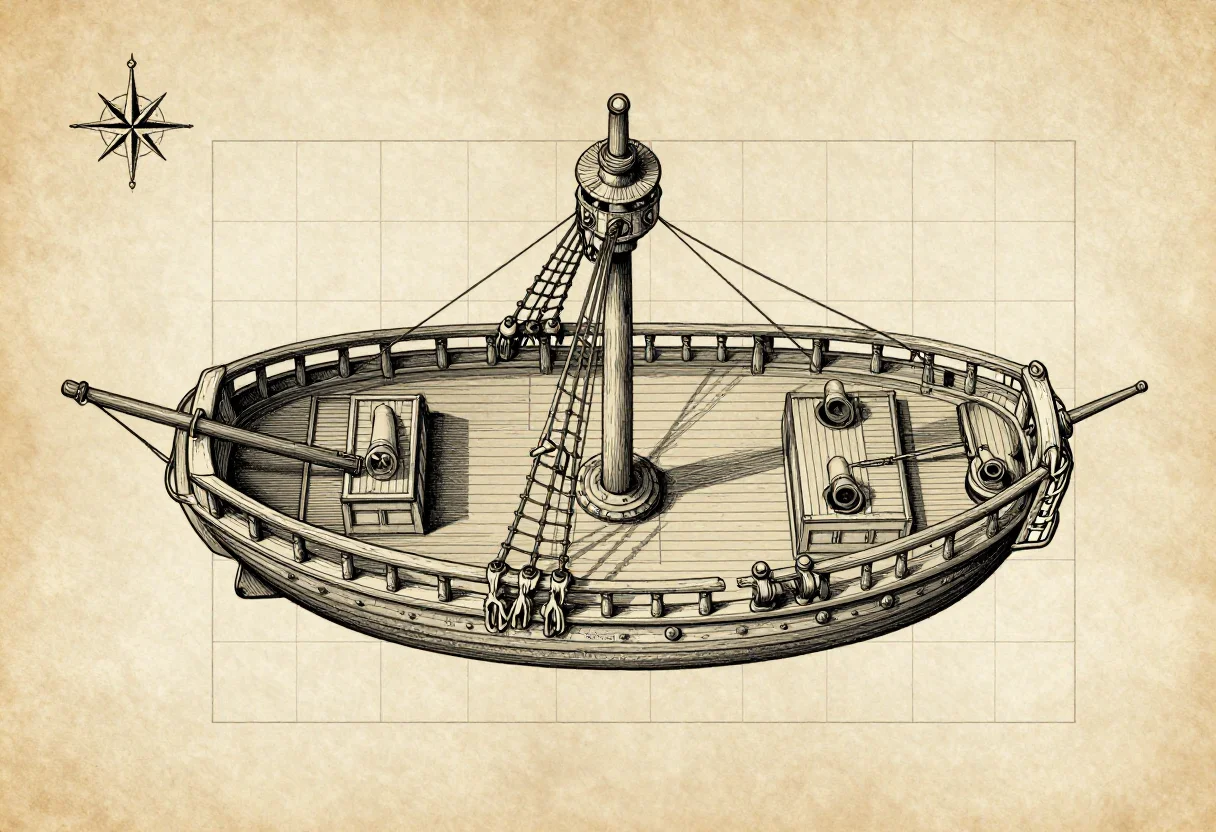
The handout with the burnt edge that the party unrolls at the table. These nine maps cover three coasts — an island cove, a strait sea chart, a cliff cave — each drawn with a dotted trail, a compass rose, and no legible text anywhere on the sheet. Fine hatching, bold woodcut and stippled ink finishes. Print, age the edges, and hand it across the table.
- a physical prop handed to players at the table
- a printable insert for a session-zero packet
- wall art for a game room
- a party favor for a pirate-themed birthday
Frequently asked questions
- Does the map contain any readable words?
- No — every design is drawn with no legible text or labels, so it reads as a prop rather than a spoiler.
- What size does the map print at?
- Each map is laid out at landscape proportions, ready to print at standard letter or A4 size, or larger for a wall print.
- Can I get a different coastline?
- Yes — the direction field redraws the sheet with another map, such as a city map.
About toile
This page is a showcase and a starting point: nine samples already rendered, three readings of the pack crossed with three styles, each shown at the size and ratio it was made for. Take any of them further on the wall with a few words, or ask for all nine again under your own direction; a sign-in keeps what you make, and it is free while Toile is new. The recipe behind each sample — the subject, the style, the palette, the framing — travels with the image rather than staying private to the render: it is in the alt text of every sample and in the page's own structured data, so a search engine reads the same handles a person would.