/us-states-worksheets · classroom
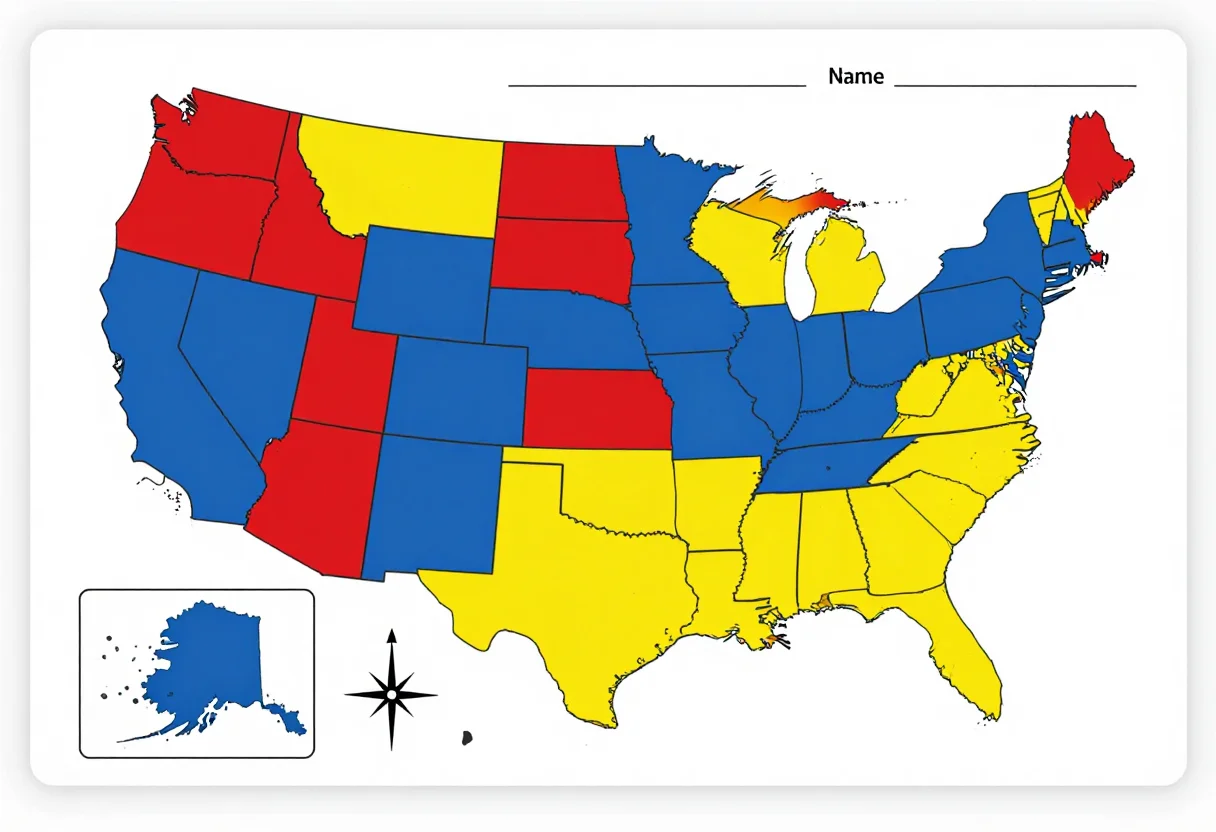
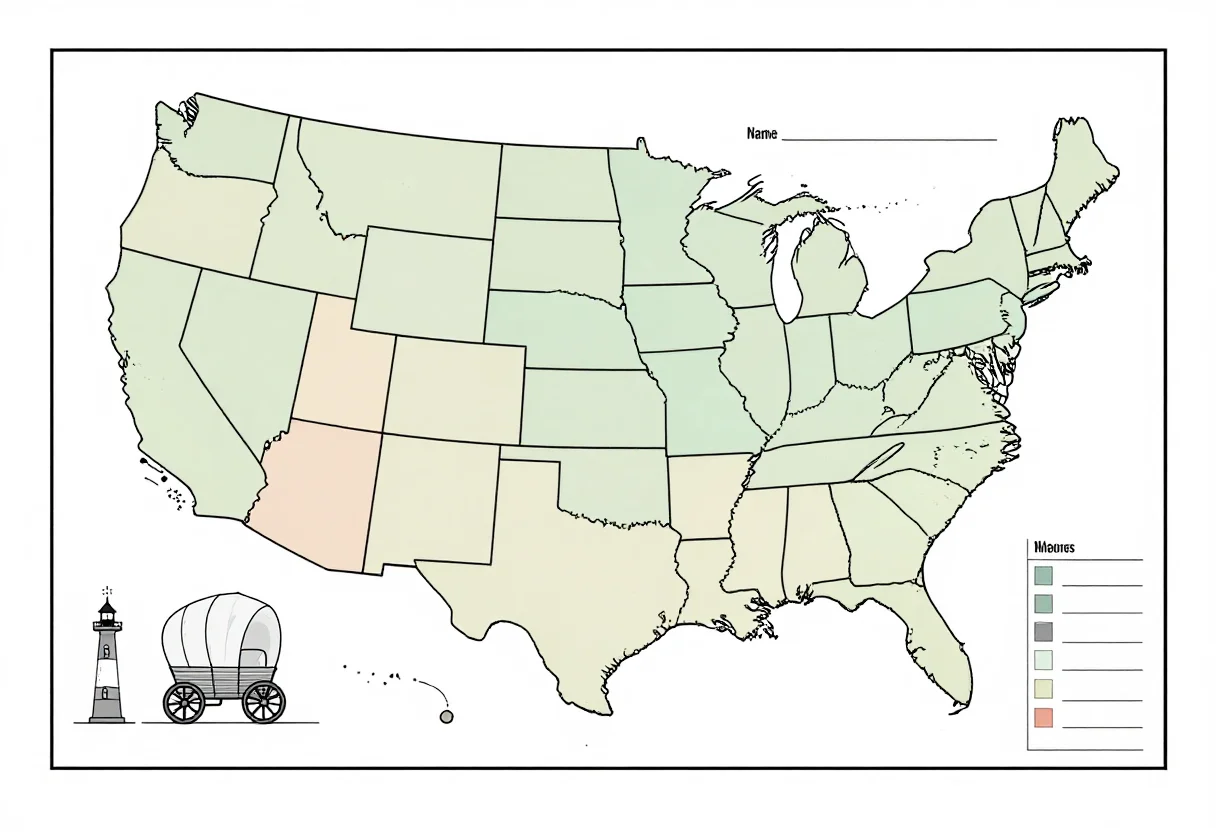
US states worksheet: blank outline map, state facts and regions map
Make your ownUS states
Describe yours. We'll remake the whole pack your way.
More like this
the whole catalog →

every sample — three subjects, three styles ↓
The blank outline map of the fifty states, the single-state fact sheet, and the regions map are the geography unit's three pages. Outlines are the content — drawn with geographic accuracy — while labels stay blank for students to fill in. These nine sit beside the continents-and-oceans pack as this unit's US-specific door. Type a different focus and the map redraws.
- a blank US map printable for labeling practice
- a 50 states worksheet for a geography unit
- a single-state fact sheet for a states research project
- a regions of the United States map activity
- a homework sheet for state capitals or geography review
Frequently asked questions
- Are the state names or capitals already labeled?
- No — the outline map's labels are left blank so students fill in state names, abbreviations, or capitals themselves.
- Is the map geographically accurate?
- Yes — the state outlines are drawn to reflect real US geography, since this is a reference-map pack.
- What's the single-state fact sheet for?
- A one-state focus page — its outline, with blank fields for facts like capital, nickname, or bordering states — for a states research project.
- How is the regions map different from the states outline?
- The regions map groups states into US regions (Northeast, Midwest, South, West, etc.) rather than showing each state individually.
About toile
This page is a showcase and a starting point: nine samples already rendered, three readings of the pack crossed with three styles, each shown at the size and ratio it was made for. Take any of them further on the wall with a few words, or ask for all nine again under your own direction; a sign-in keeps what you make, and it is free while Toile is new. The recipe behind each sample — the subject, the style, the palette, the framing — travels with the image rather than staying private to the render: it is in the alt text of every sample and in the page's own structured data, so a search engine reads the same handles a person would.