/valentines-word-searches · season
Valentine's word searches: easy, medium and heart-shaped grids
Make your ownValentine's word searches
Describe yours. We'll remake the whole pack your way.
More like this
the whole catalog →

every sample — three subjects, three styles ↓
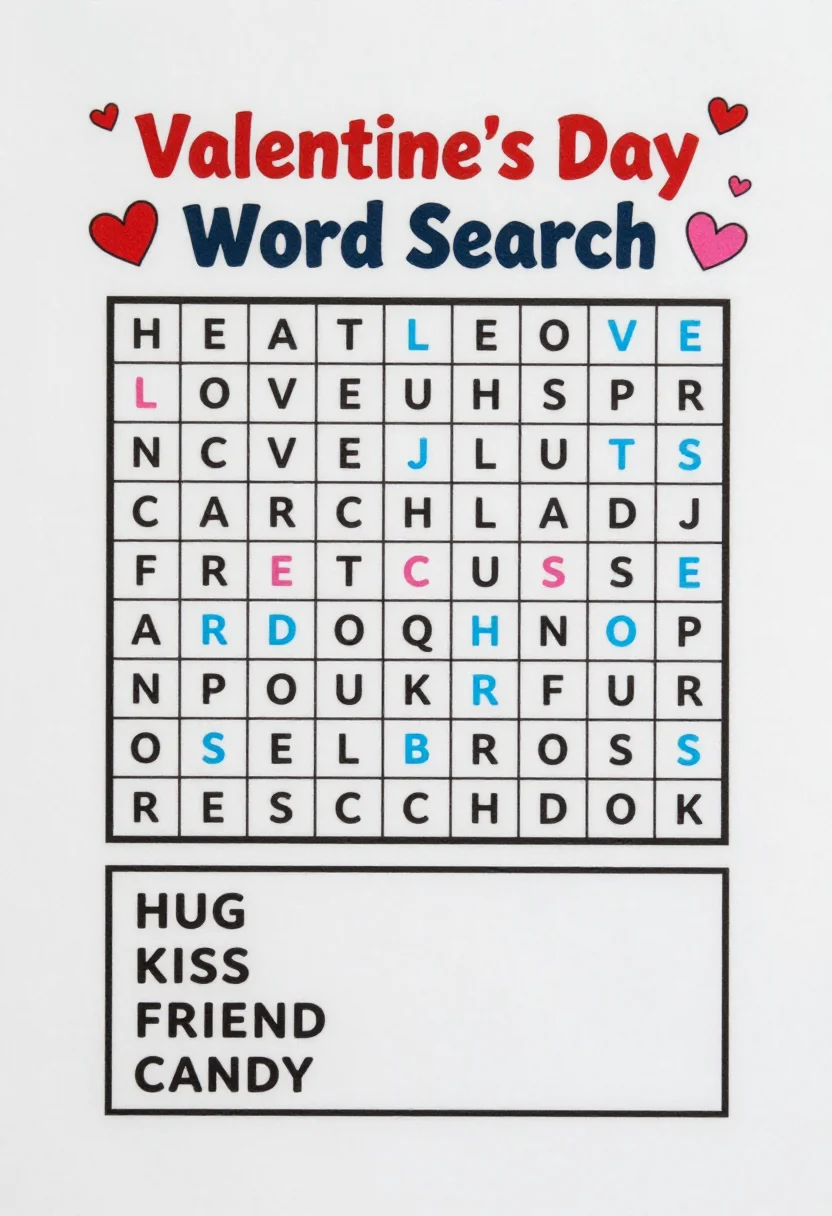
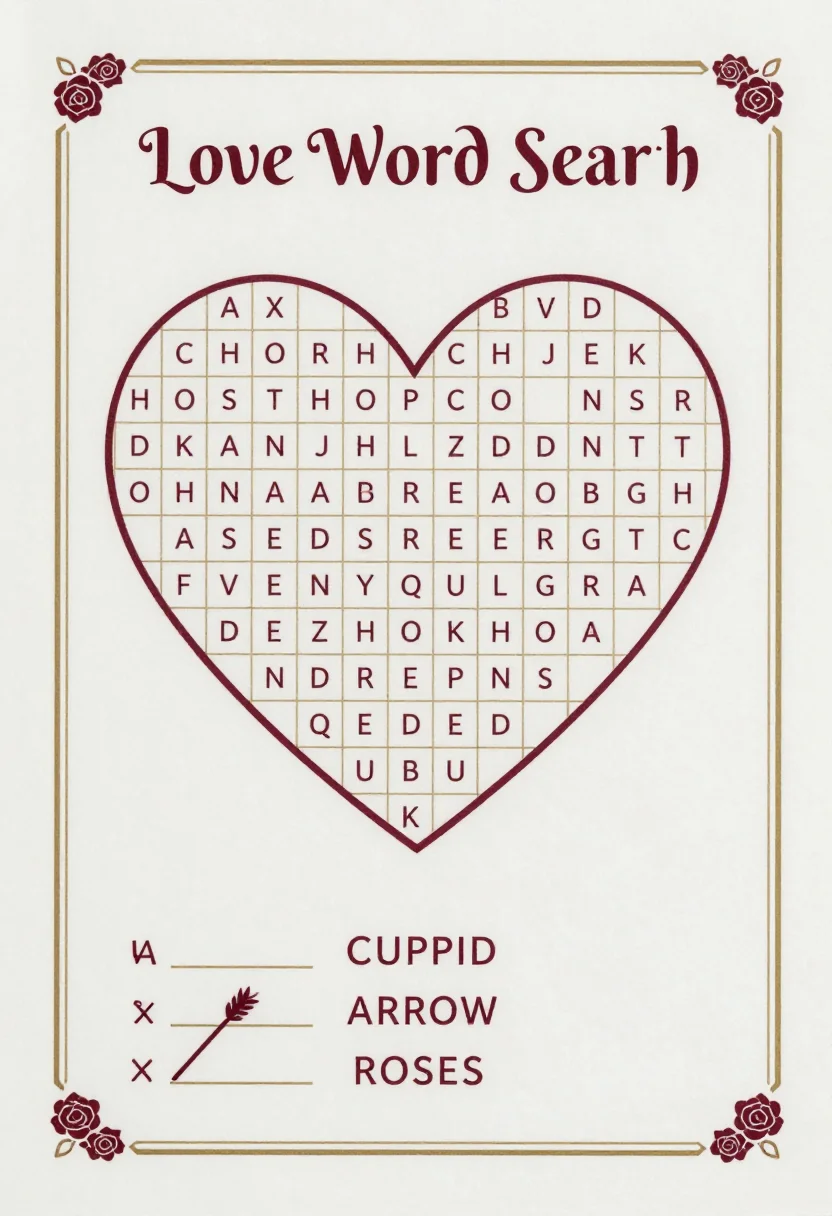
Valentine's word searches are puzzle sheets for a February classroom or a quiet afternoon. Each sheet has a title, a letter grid and a word list. The three levels are a ten-by-ten grid of simple words, a fifteen-by-fifteen grid with a longer list, and a grid cut into the shape of a heart. Each comes as a first-reader, classic or adult elegant sheet. Type a different word set, such as Spanish, and the sheet is drawn to that request.
- a classroom Valentine's activity
- an early-finisher sheet in February
- a quiet activity for a long car ride
- a large-print puzzle for an adult
Frequently asked questions
- How big is the grid?
- The easy sheet uses a ten-by-ten grid, and the medium sheet uses fifteen by fifteen.
- Are the words the same on every level?
- No. Each level has its own list, from HEART and LOVE on the easy sheet to ADORE and CHERISH on the heart-shaped one.
- What is the difference between the three looks?
- First-reader has big rounded letters and cartoon hearts. Classic is a clean classroom sheet with boxed words, and adult elegant has a serif title and a thin ornamental border.
- Can I ask for a different word set?
- Yes. Type a request such as Spanish in the direction field, and the sheet is drawn to ask for it.
About toile
This page is a showcase and a starting point: nine samples already rendered, three readings of the pack crossed with three styles, each shown at the size and ratio it was made for. Take any of them further on the wall with a few words, or ask for all nine again under your own direction; a sign-in keeps what you make, and it is free while Toile is new. The recipe behind each sample — the subject, the style, the palette, the framing — travels with the image rather than staying private to the render: it is in the alt text of every sample and in the page's own structured data, so a search engine reads the same handles a person would.