/valentines-worksheets · season
Valentine's worksheets: count the hearts, heart addition, writing prompt
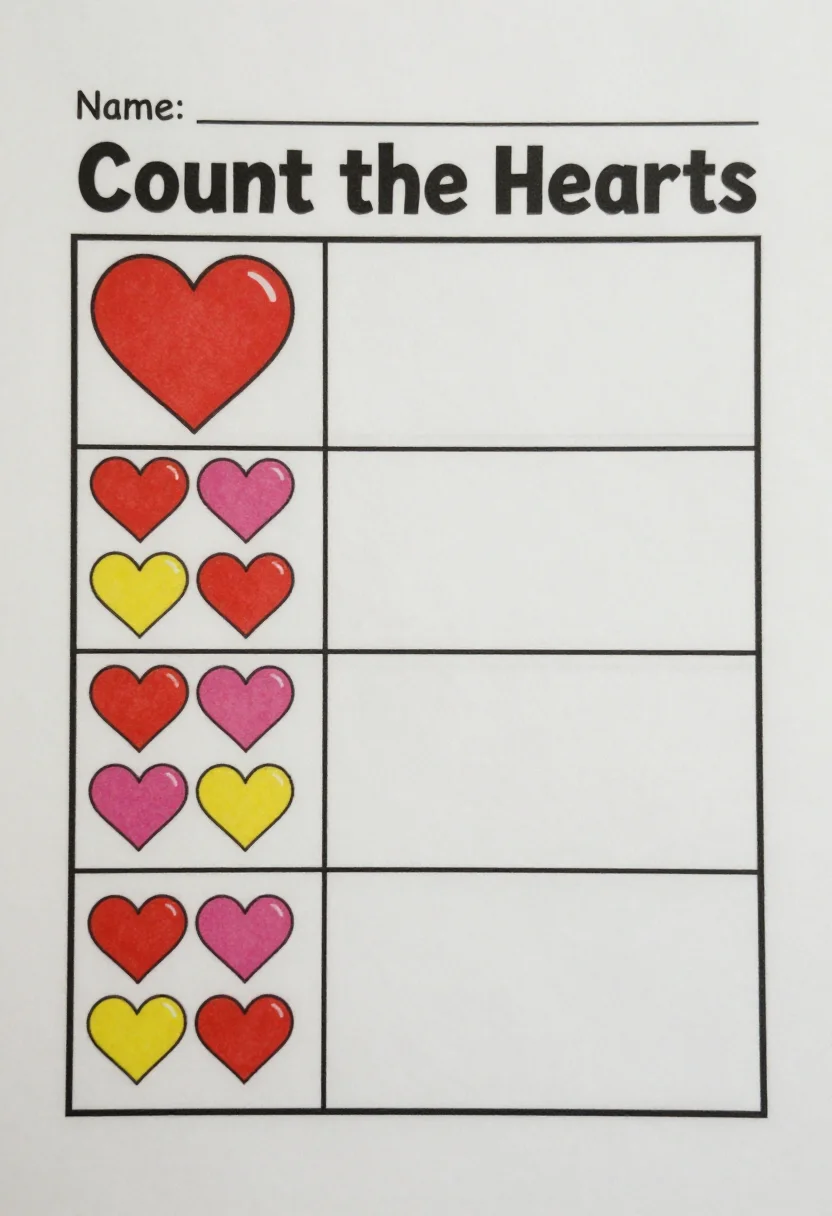
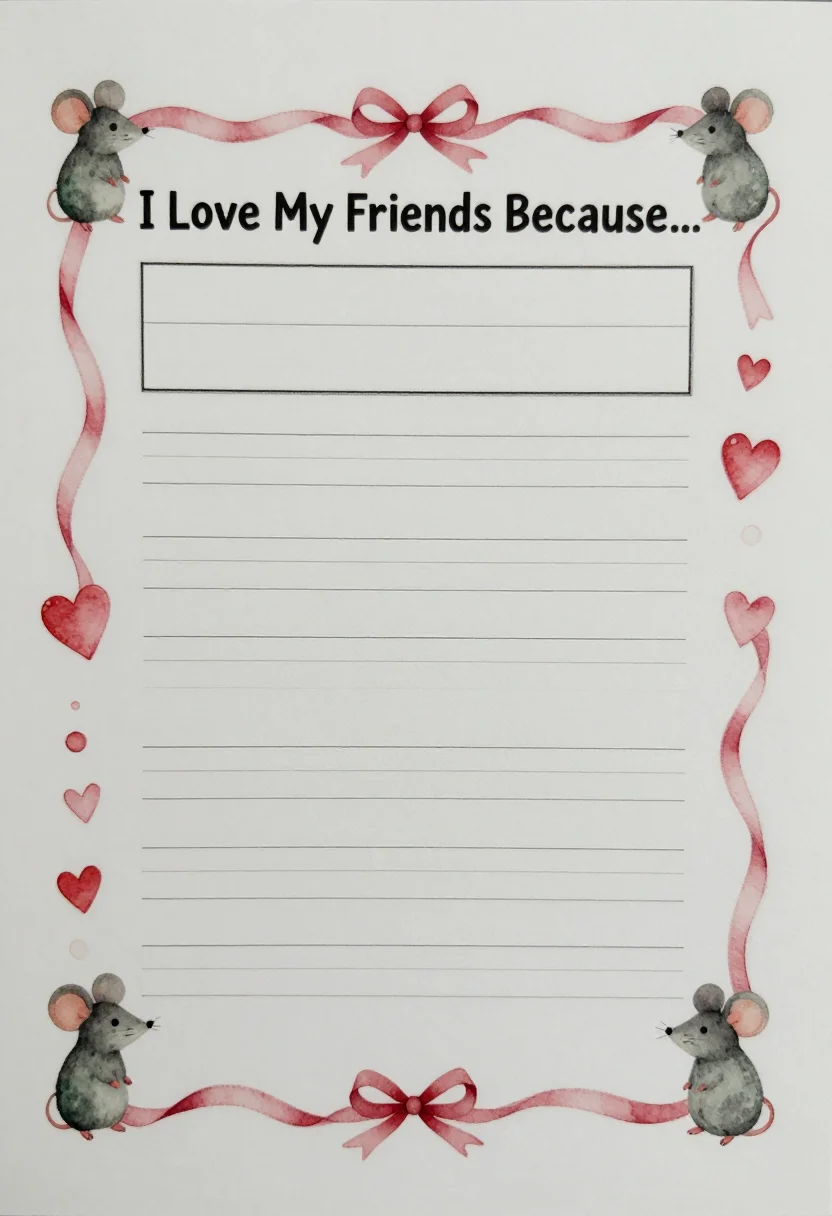
Make your ownValentine's worksheets
Describe yours. We'll remake the whole pack your way.
More like this
the whole catalog →


every sample — three subjects, three styles ↓
Valentine's worksheets are classroom and homeschool sheets for the week of Valentine's Day, from preschool counting to early writing. Each has a title, a name line, clear instructions and room to answer. The exercises are counting hearts in groups of one to six, twelve heart addition sums, and a writing prompt with five ruled lines. Each comes as a playful, plain or storybook sheet. Type a level, such as grade 2, and the sheet is drawn to it.
- a February math or writing sheet
- a homeschool week of Valentine's activities
- a substitute teacher's lesson sheet
- an early-finisher task for the week
Frequently asked questions
- What grade level are the sheets for?
- The counting sheet suits preschool, the addition sheet suits first grade, and the writing prompt suits early writing. Type another level, such as grade 2, in the direction field to ask for it.
- How many sums are on the addition sheet?
- Twelve sums, each followed by an empty heart to write the answer in.
- Is there room to write the answers?
- Yes. The counting sheet has an empty answer square beside each group, and the writing prompt has a drawing box and five ruled lines.
- How do the three looks differ?
- Playful has big cheerful hearts and bright answer boxes. Plain is a photocopier-style black-and-white sheet, and storybook has mice, hearts and ribbons in watercolor borders.
About toile
This page is a showcase and a starting point: nine samples already rendered, three readings of the pack crossed with three styles, each shown at the size and ratio it was made for. Take any of them further on the wall with a few words, or ask for all nine again under your own direction; a sign-in keeps what you make, and it is free while Toile is new. The recipe behind each sample — the subject, the style, the palette, the framing — travels with the image rather than staying private to the render: it is in the alt text of every sample and in the page's own structured data, so a search engine reads the same handles a person would.