/vowel-charts · classroom
Vowel charts: short vowels, long vowels, vowel teams
Make your ownVowel charts
Describe yours. We'll remake the whole pack your way.
More like this
the whole catalog →
every sample — three subjects, three styles ↓
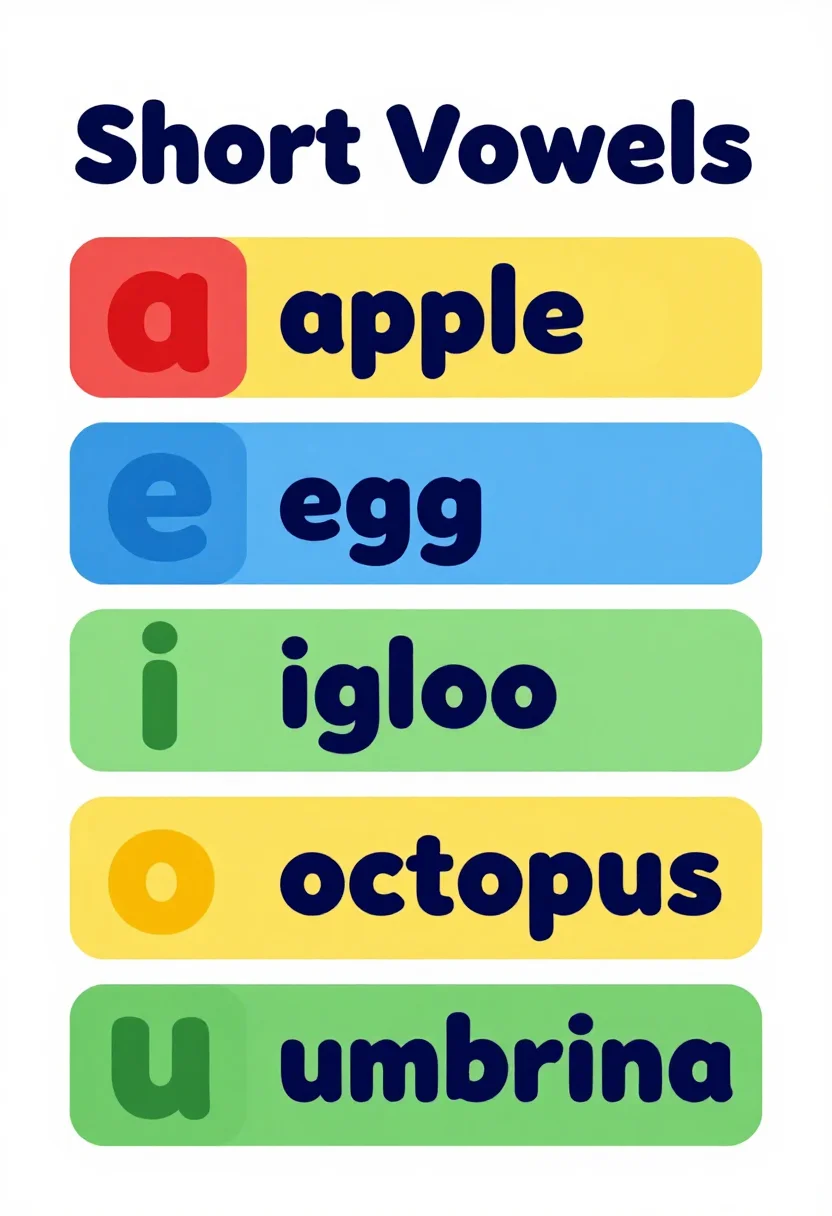
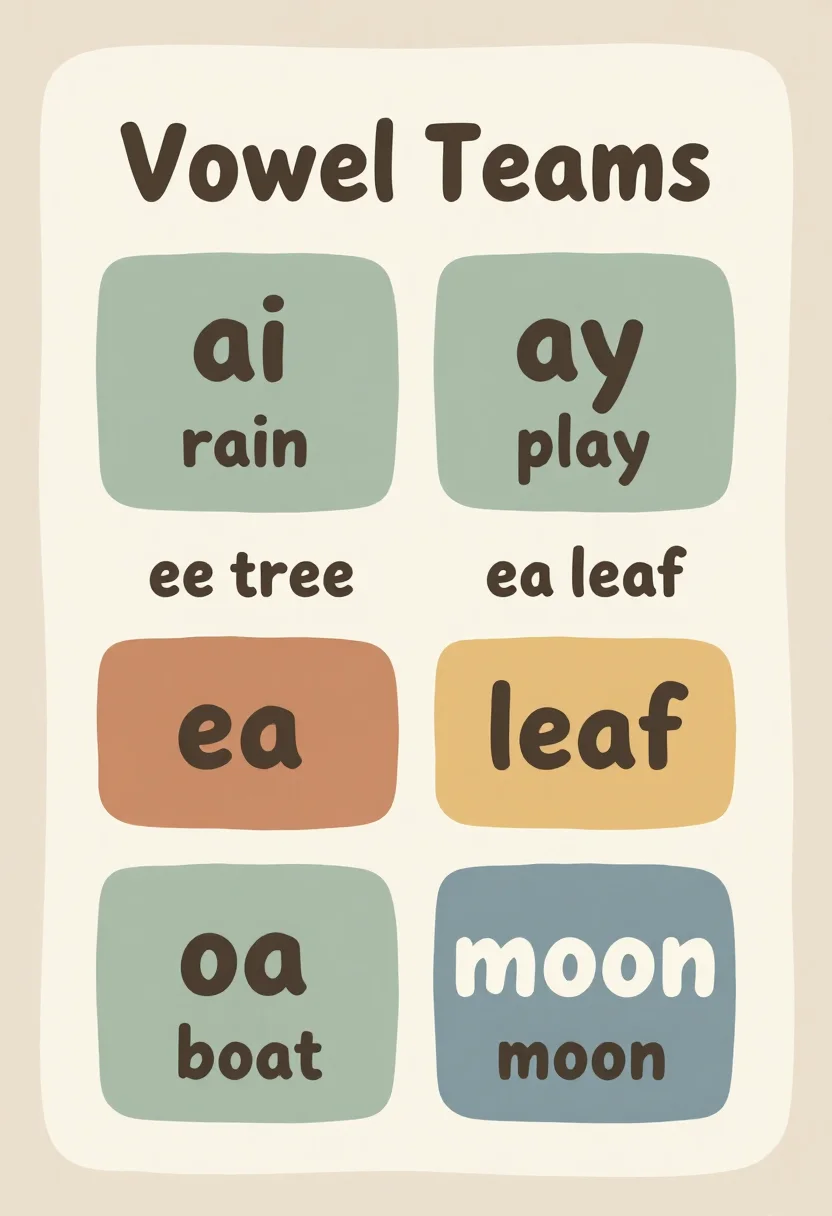
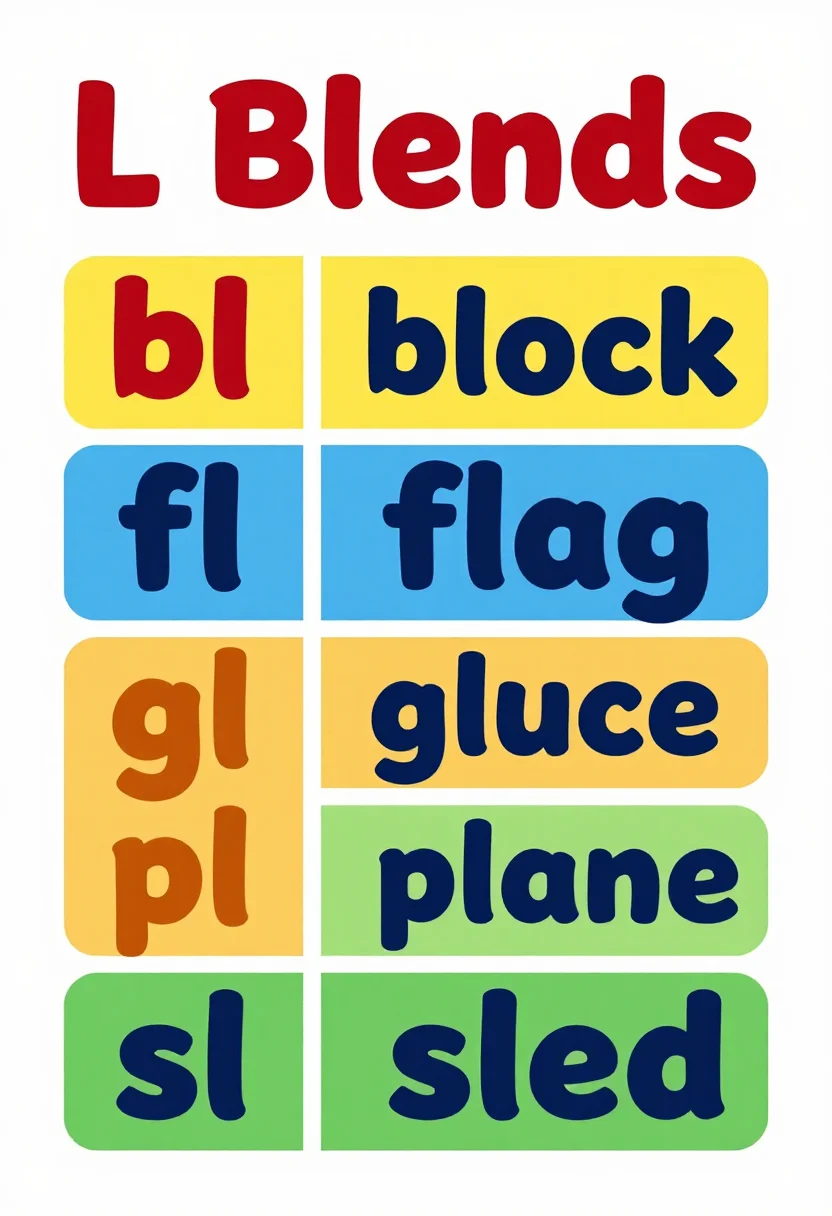
Teachers and parents teaching reading use vowel charts for the sounds children mix up most. The three charts are short vowels with a key word for each letter, long vowels with a silent e in a different color, and six vowel teams such as ai in rain and oa in boat. The styles are bright flat, crayon hand-drawn and boho pastel. Type a twist, such as vowel y, and the same chart can take it.
- a reading wall by the phonics corner
- a reference chart for a reading group
- a sound card for practice at home
Frequently asked questions
- What are the key words for the short vowels?
- Apple, egg, igloo, octopus and umbrella, each with its picture beside the letter.
- How is the silent e shown?
- On the long vowel chart the final e is in a different color, with words such as cake, bee, kite, rope and cube.
- Which vowel teams are shown?
- Ai, ay, ee, ea, oa and oo, each with a word and picture, such as rain, play, tree, leaf, boat and moon.
- What is the difference between the styles?
- Bright flat uses clean shapes, crayon hand-drawn looks like a marker poster, and boho pastel is soft and muted.
About toile
This page is a showcase and a starting point: nine samples already rendered, three readings of the pack crossed with three styles, each shown at the size and ratio it was made for. Take any of them further on the wall with a few words, or ask for all nine again under your own direction; a sign-in keeps what you make, and it is free while Toile is new. The recipe behind each sample — the subject, the style, the palette, the framing — travels with the image rather than staying private to the render: it is in the alt text of every sample and in the page's own structured data, so a search engine reads the same handles a person would.