/world-religions-charts · classroom
World religions chart: religious symbols, holy books and festivals, places of worship
Make your ownWorld religions charts
Describe yours. We'll remake the whole pack your way.
More like this
the whole catalog →
every sample — three subjects, three styles ↓
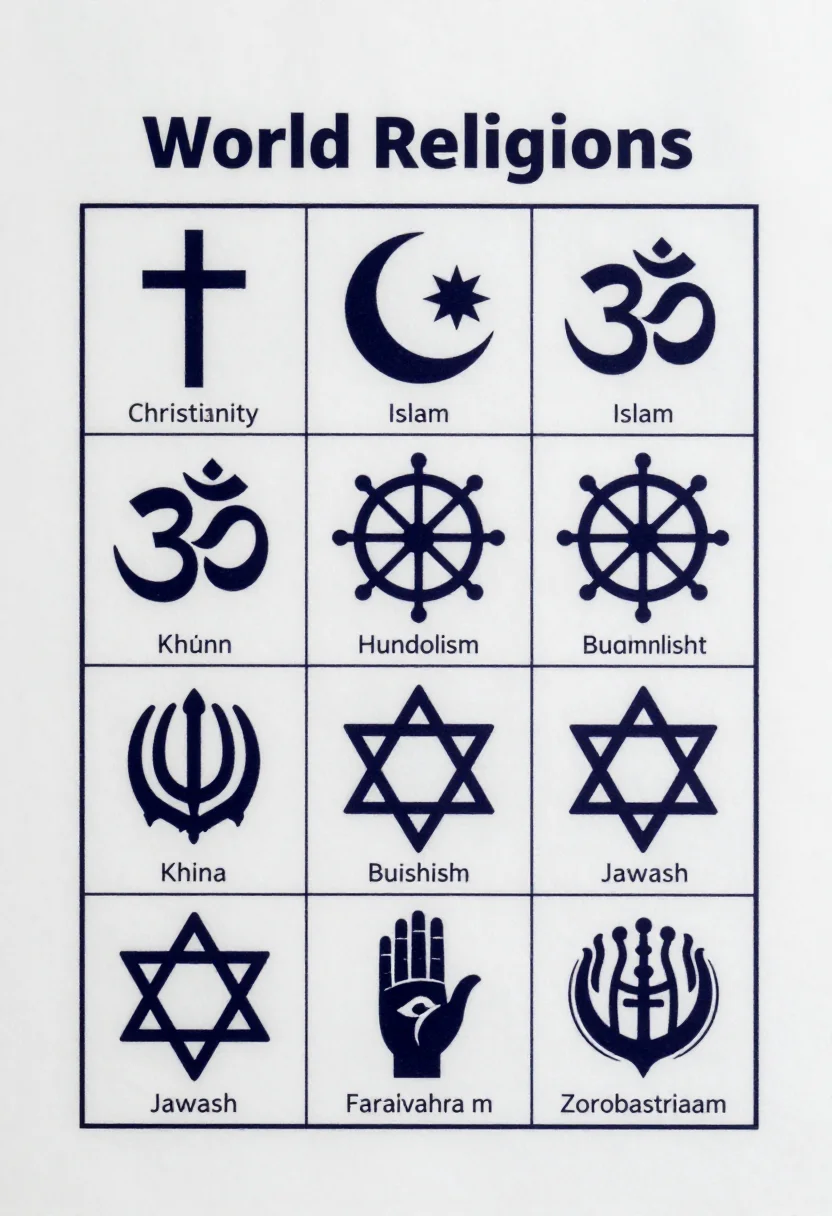
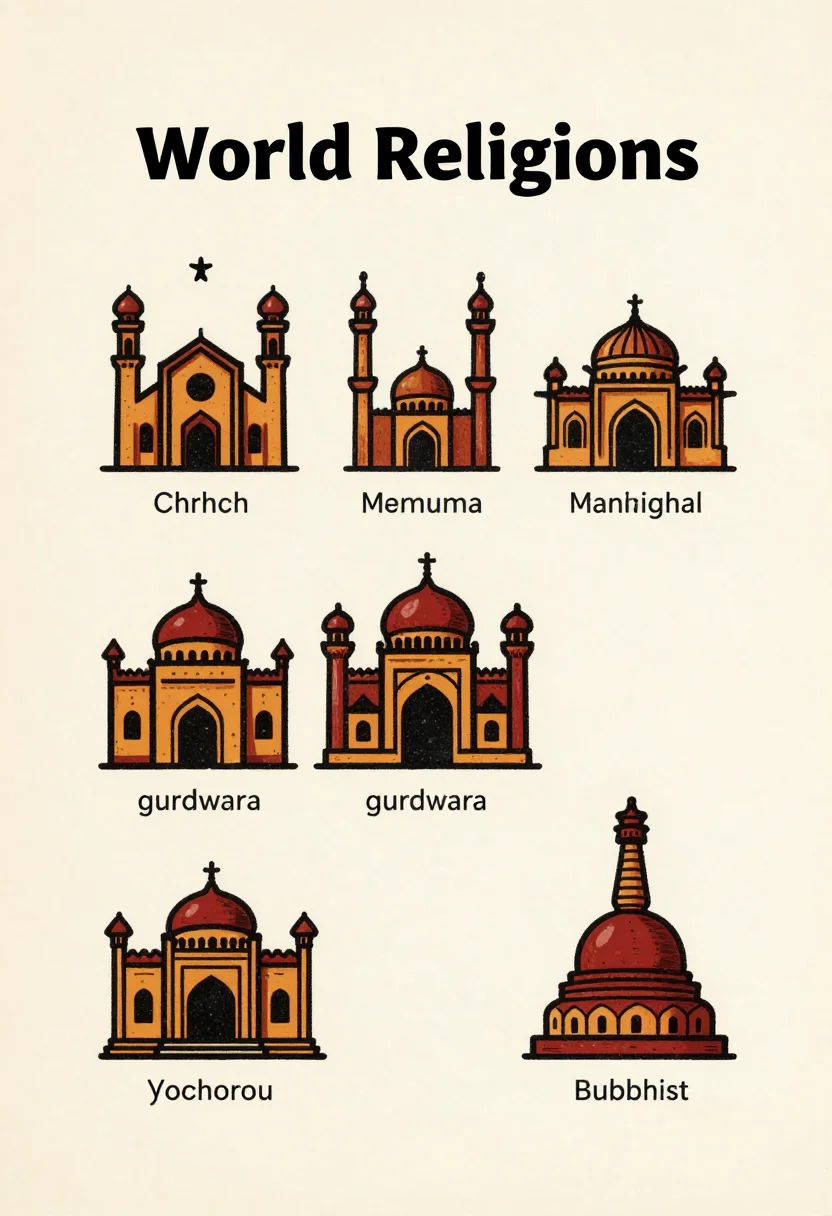
A chart of the world's faiths for students of religious education and social studies. The symbols chart names the cross, crescent and star, Om, Dharma wheel and more. The comparison table gives each faith's holy book, place of worship and festival. The worship chart draws six buildings with names. Type a direction, such as festivals, and the picture will try it.
- a religious education or social studies lesson
- a comparison table for a class project
- a classroom wall chart of symbols
- a reference for a school visit to a place of worship
Frequently asked questions
- What do the nine pictures show?
- Three charts in three styles: a grid of religious symbols, a comparison table of holy books, places of worship and main festivals, and six places of worship.
- Which faiths are in the table?
- Christianity, Islam, Hinduism, Sikhism, Buddhism, Judaism and Zoroastrianism, with each faith's holy book, place of worship and main festival.
- What is the difference between the three styles?
- The school chart uses thin ruled panels and small print, the wall poster uses thick outlines and bright flat fills, and the woodcut has carved black lines on cream.
- Can I ask for a chart about festivals only?
- Yes. A direction such as festivals is a request the picture will try to follow, not a guaranteed result.
About toile
This page is a showcase and a starting point: nine samples already rendered, three readings of the pack crossed with three styles, each shown at the size and ratio it was made for. Take any of them further on the wall with a few words, or ask for all nine again under your own direction; a sign-in keeps what you make, and it is free while Toile is new. The recipe behind each sample — the subject, the style, the palette, the framing — travels with the image rather than staying private to the render: it is in the alt text of every sample and in the page's own structured data, so a search engine reads the same handles a person would.