/beard-length-charts · beauty
Beard length charts: growth from one week to six months, trim by zone
Make your ownBeard length charts
Describe yours. We'll remake the whole pack your way.
More like this
the whole catalog →


every sample — three subjects, three styles ↓
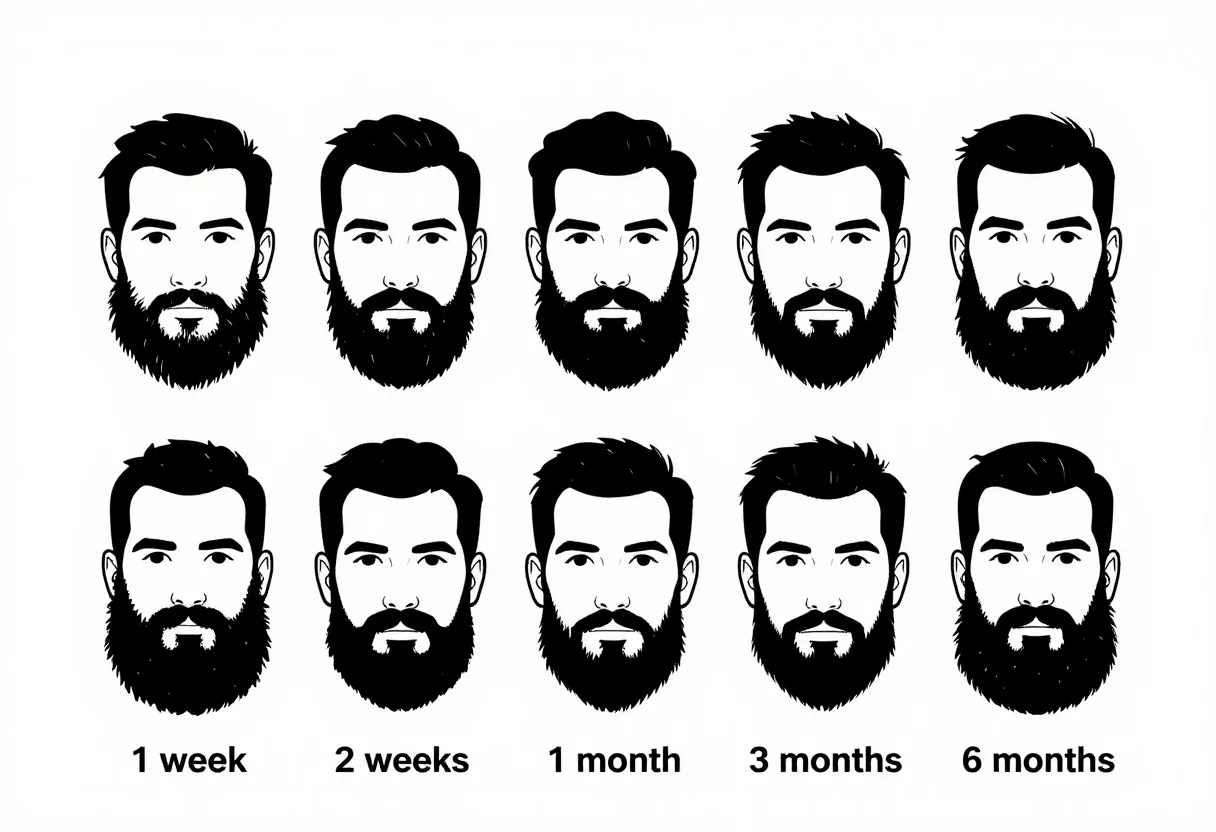
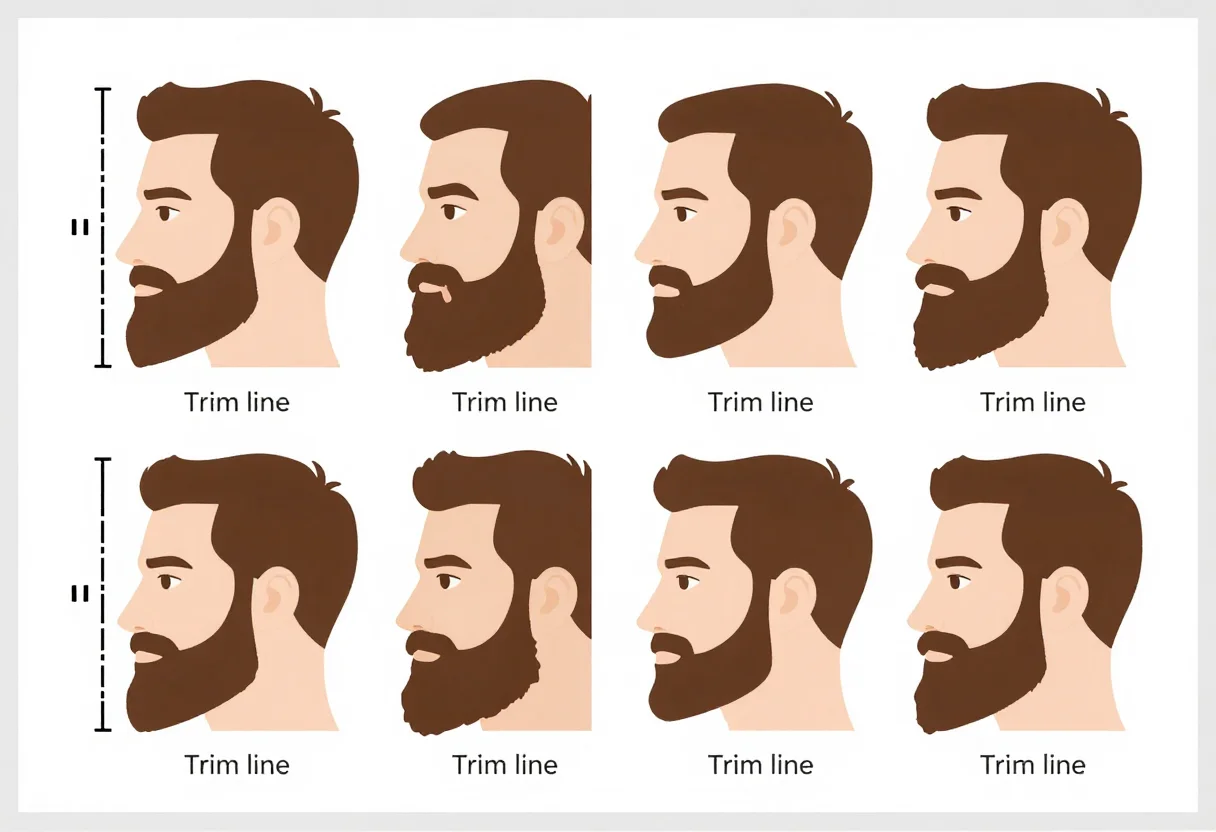
A beard length chart shows what to expect as a beard grows. One row shows the same face at 1 week, 2 weeks, 1 month, 3 months and 6 months. Another divides the beard into Cheeks, Moustache, Chin and Neck, with a line for the trimmer length. A side view marks a neckline from the ear to two fingers above the Adam's apple. Type a beard, such as gray beard, and the chart is drawn for it.
- knowing what to expect in the first months
- setting trimmer lengths by zone
- a barber's neckline reference
- planning a beard before an event
Frequently asked questions
- How long does a beard take to grow?
- The growth row runs one face from stubble at one week to a full beard at six months. Beards grow at different speeds, so treat the timing as an example.
- Where should the neckline sit?
- The side view places the trim line from the ear to a point about two fingers above the Adam's apple. It is a starting guide, and you can adjust it.
- Can I type a different beard?
- Yes. Type the beard you want, such as ginger beard, and the chart is drawn for it in place of the one shown.
- What do the three styles show differently?
- The line chart uses black strokes for the beard, the pencil sketch is grey shading, and the brown tint washes the beard in warm color alone.
About toile
This page is a showcase and a starting point: nine samples already rendered, three readings of the pack crossed with three styles, each shown at the size and ratio it was made for. Take any of them further on the wall with a few words, or ask for all nine again under your own direction; a sign-in keeps what you make, and it is free while Toile is new. The recipe behind each sample — the subject, the style, the palette, the framing — travels with the image rather than staying private to the render: it is in the alt text of every sample and in the page's own structured data, so a search engine reads the same handles a person would.