/biopunk · style
Biopunk: the grown tower, the organic implant, the living lab

Make your ownBiopunk
Describe yours. We'll remake the whole pack your way.
More like this
the whole catalog →
every sample — three subjects, three styles ↓
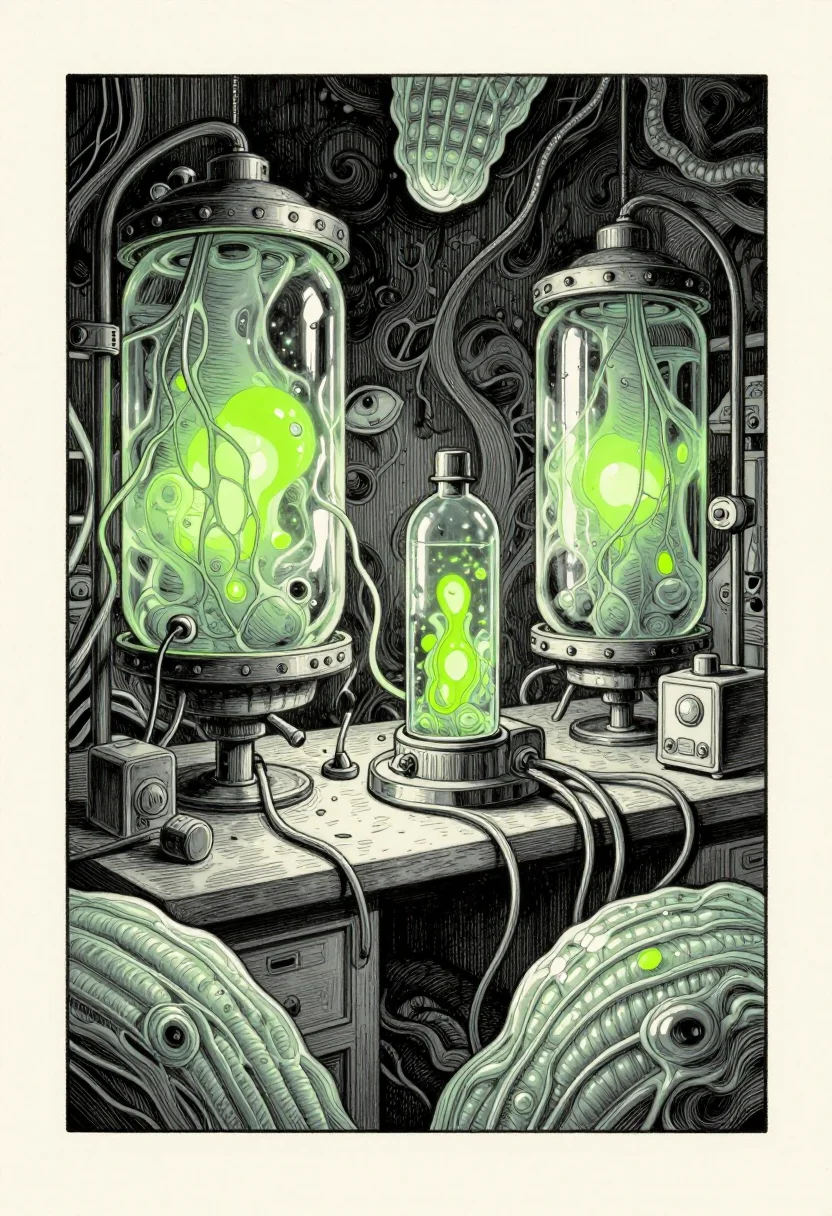
Biopunk is flesh as technology: grown architecture with veins, a cyborg whose implants are organic, a lab where the machines breathe — wet, ribbed, bioluminescent. These nine render a grown tower, an organic-implant portrait and a living lab, each across three finishes — fully painted, clean 3D render, and inked line art. Ask for a garden instead, a brighter and cleaner palette, or an insect subject — the same three finishes carry it.
- a sci-fi or bio-tech themed room print
- a concept-art or game-room wall print
- a poster or fine-art print
- a book cover or editorial illustration reference
- a desktop or phone wallpaper
Frequently asked questions
- What size do these render at?
- Each render is composed as a wide concept-art panel, suited to a poster, a wallpaper or a large print.
- Can I get a different scene, like a garden or an insect?
- Yes — the direction field takes any subject, and the same three finishes render it.
- What's the difference between the three finishes?
- Painted is fully rendered with organic texture and light; render is a clean, smooth 3D look; ink strips it to line-work illustration.
- Is this depicting a real biotechnology or a real person's implant?
- No — it's an invented, rendered scene in the biopunk genre, not a depiction of any real technology or person.
About toile
This page is a showcase and a starting point: nine samples already rendered, three readings of the pack crossed with three styles, each shown at the size and ratio it was made for. Take any of them further on the wall with a few words, or ask for all nine again under your own direction; a sign-in keeps what you make, and it is free while Toile is new. The recipe behind each sample — the subject, the style, the palette, the framing — travels with the image rather than staying private to the render: it is in the alt text of every sample and in the page's own structured data, so a search engine reads the same handles a person would.