/ethiopian-icons · style
Ethiopian icons: a mounted saint, a mother and child and rows of angels
Make your ownEthiopian icons
Describe yours. We'll remake the whole pack your way.
More like this
the whole catalog →
every sample — three subjects, three styles ↓
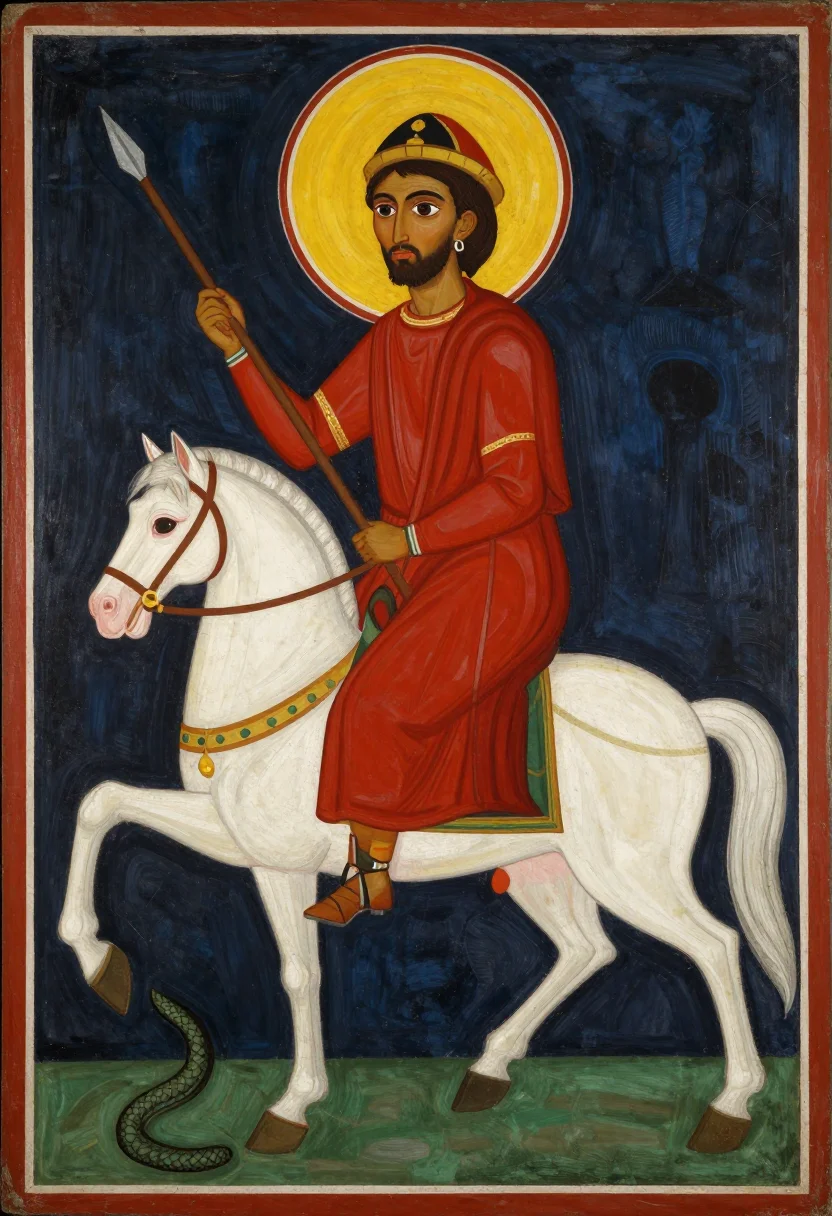
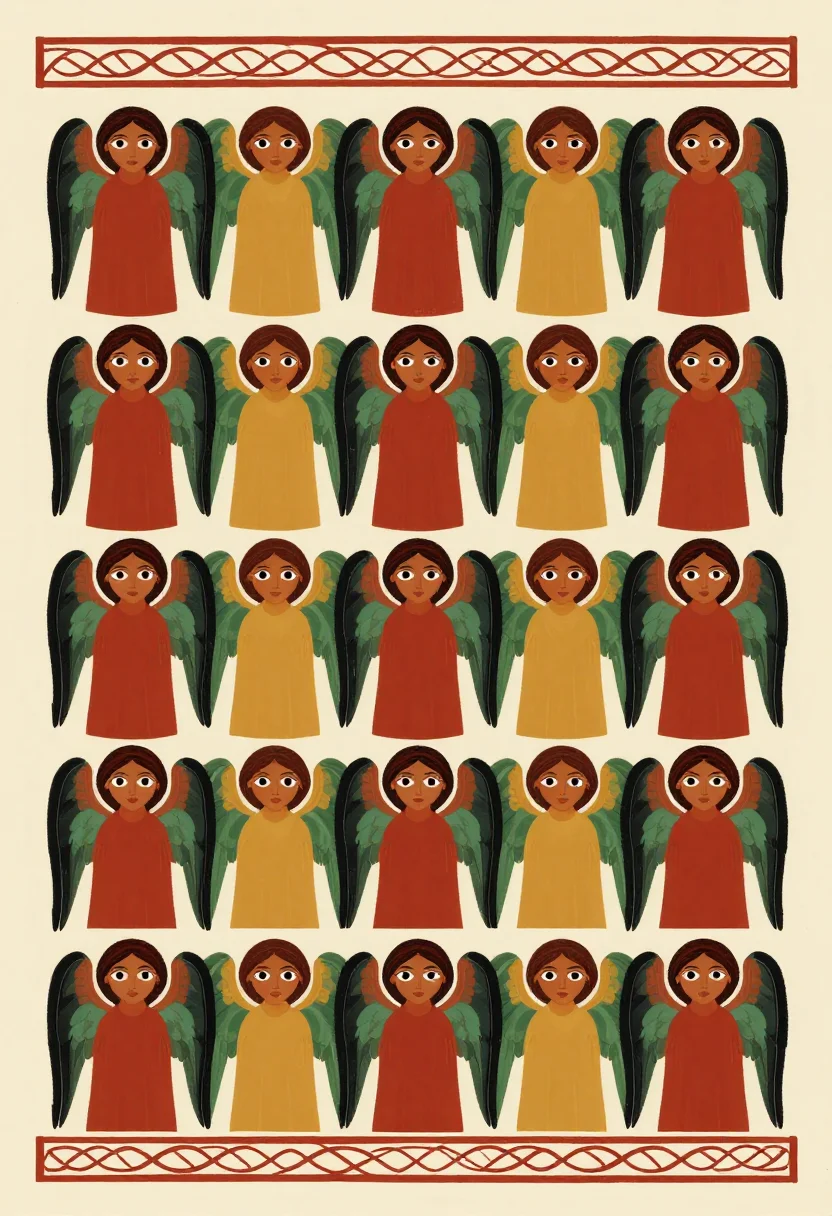
Ethiopian icon painting reads in large almond eyes looking straight out, flat red and yellow and green, a saint on a horse spearing a serpent. These nine render a mounted saint, a mother and child, and rows of angels' heads, as a painted panel, a manuscript illumination, or modern flat illustration. Ask for a lion or a processional cross instead and the same three styles redraw it.
- a wall print for a study or prayer corner
- a gift referencing Ethiopian church art
- a bookmark or small devotional print
- a set of three for a themed gallery wall
Frequently asked questions
- What size do these print at?
- Each image is drawn in portrait format (832×1216) with an even margin — prints clean on A4 held vertically.
- Can I use my own subject instead of the three shown?
- Yes — the direction field takes your own idea, such as a lion or a processional cross, and the same three styles draw it.
- What's the difference between the three styles?
- Painted panel is the classic tempera-on-wood look with flat colour and dark outline; manuscript reads as parchment illumination with an interlace border; modern flat cleans it into bright vector illustration.
- Is this a reproduction of a real icon?
- These are new images drawn in the Ethiopian icon-painting tradition — not reproductions of a specific historical panel or manuscript page.
About toile
This page is a showcase and a starting point: nine samples already rendered, three readings of the pack crossed with three styles, each shown at the size and ratio it was made for. Take any of them further on the wall with a few words, or ask for all nine again under your own direction; a sign-in keeps what you make, and it is free while Toile is new. The recipe behind each sample — the subject, the style, the palette, the framing — travels with the image rather than staying private to the render: it is in the alt text of every sample and in the page's own structured data, so a search engine reads the same handles a person would.