/forest-battle-maps · tabletop
Forest battle maps: forest clearing, forest road, ruined shrine
Make your ownForest battle maps
Describe yours. We'll remake the whole pack your way.
More like this
the whole catalog →
every sample — three subjects, three styles ↓
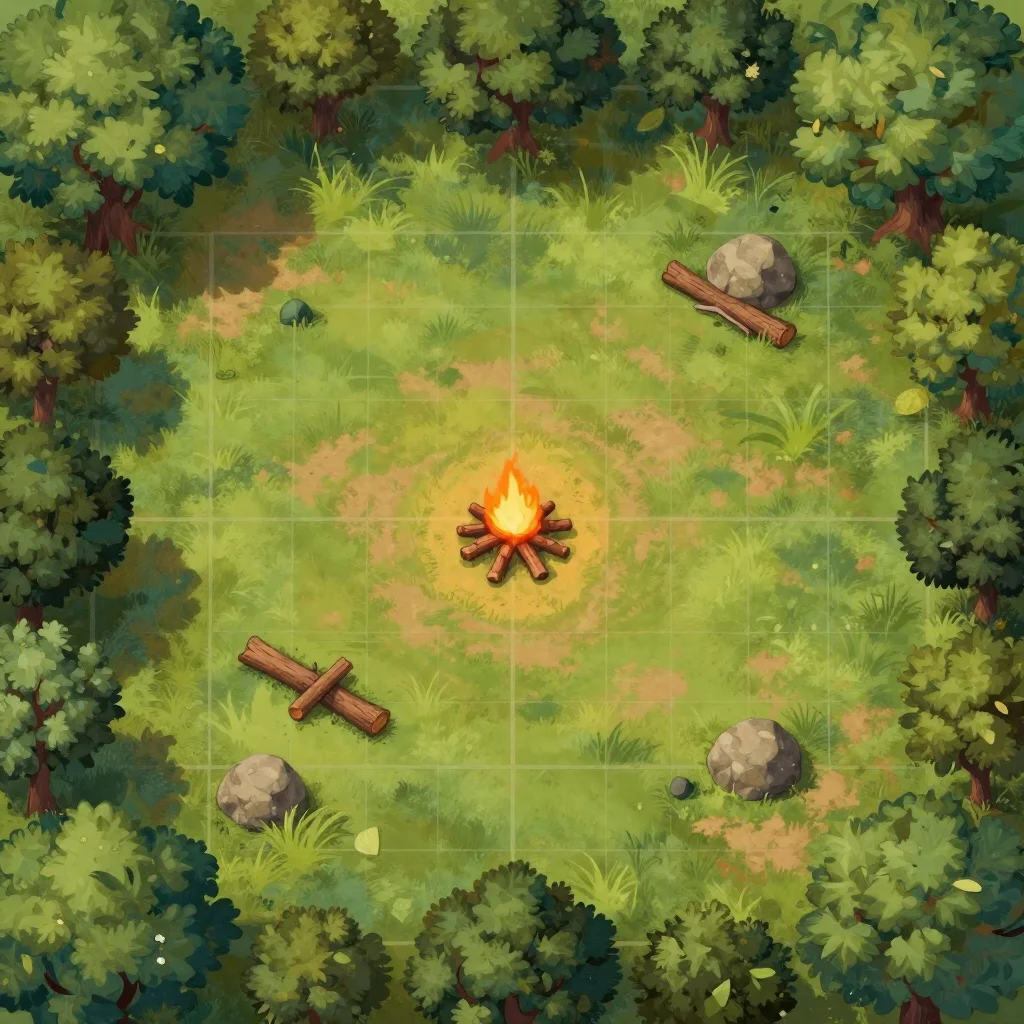
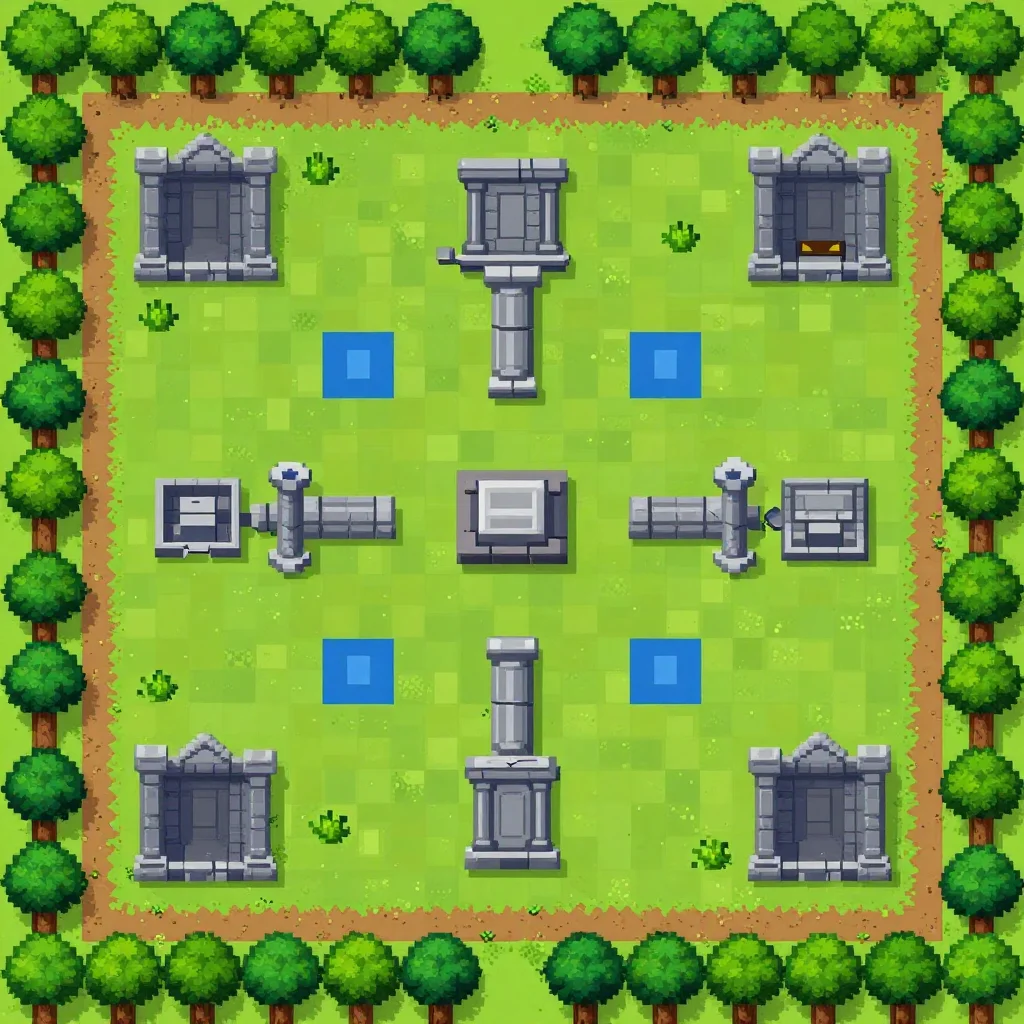
A forest battle map gives miniatures trees to hide behind, on a table or a virtual tabletop. This pack shows a grassy clearing with a campfire, a dirt road crossing a stream by a wooden bridge, and a moss-covered stone shrine among the trees. Each comes as a painted map, an ink and wash map or retro pixel tiles. Type a forest, such as winter snow, night or a swamp, and the map keeps its top-down view.
- a map for a forest ambush
- a battle map for a virtual tabletop
- a printed map laid on the table
- a ruined shrine for a side quest
Frequently asked questions
- What do the nine pictures show?
- Three readings in three styles: a forest clearing, a forest road with a river crossing, and a ruined stone shrine among the trees.
- Can I use it on a virtual tabletop?
- Yes. Each map is a square, full-bleed, top-down image, so it can be shown as it is on a screen.
- What is the difference between the styles?
- Painted has soft brush texture in greens, browns and grey. Ink and wash is black outlines with two flat colours on cream. Pixel tiles uses crisp square pixels in five colours.
- Are there miniatures or labels on the map?
- No. The maps have no miniatures, characters, text or labels, so the figures are yours to place.
About toile
This page is a showcase and a starting point: nine samples already rendered, three readings of the pack crossed with three styles, each shown at the size and ratio it was made for. Take any of them further on the wall with a few words, or ask for all nine again under your own direction; a sign-in keeps what you make, and it is free while Toile is new. The recipe behind each sample — the subject, the style, the palette, the framing — travels with the image rather than staying private to the render: it is in the alt text of every sample and in the page's own structured data, so a search engine reads the same handles a person would.