/iznik · ornament
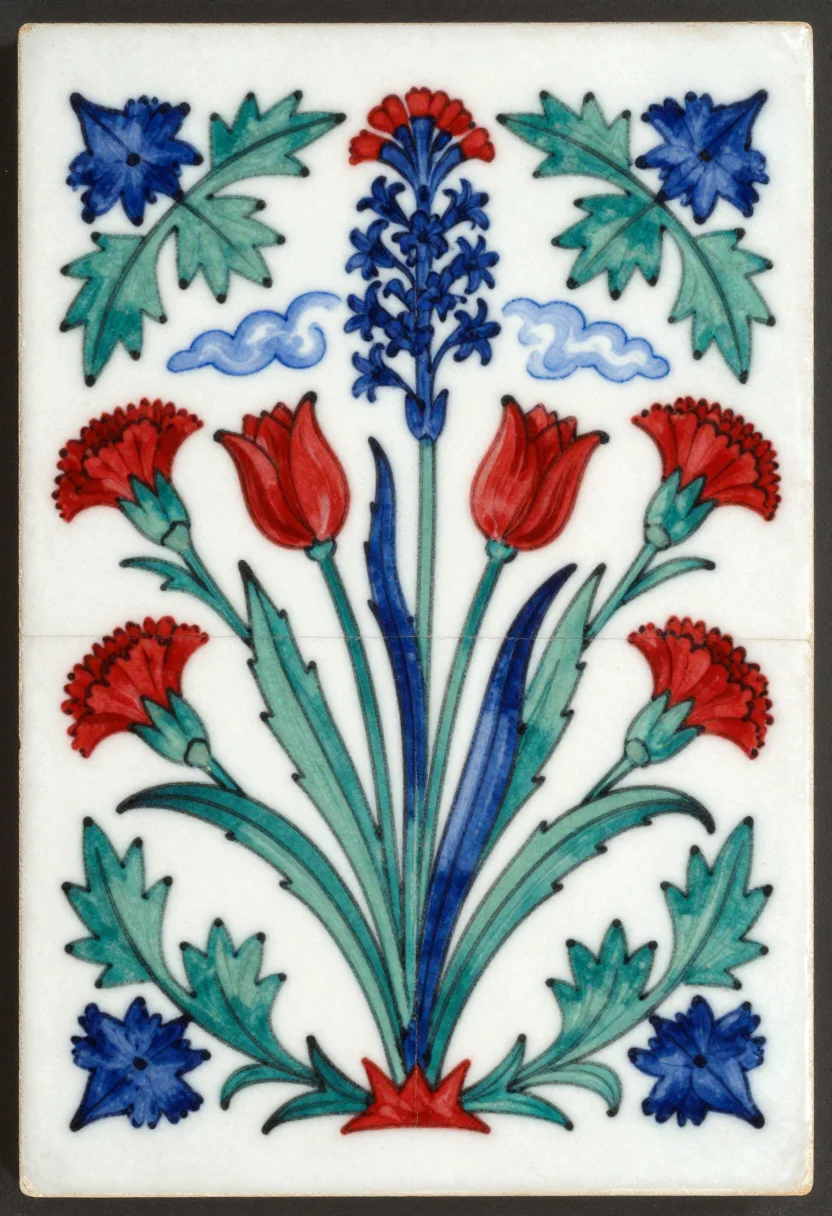
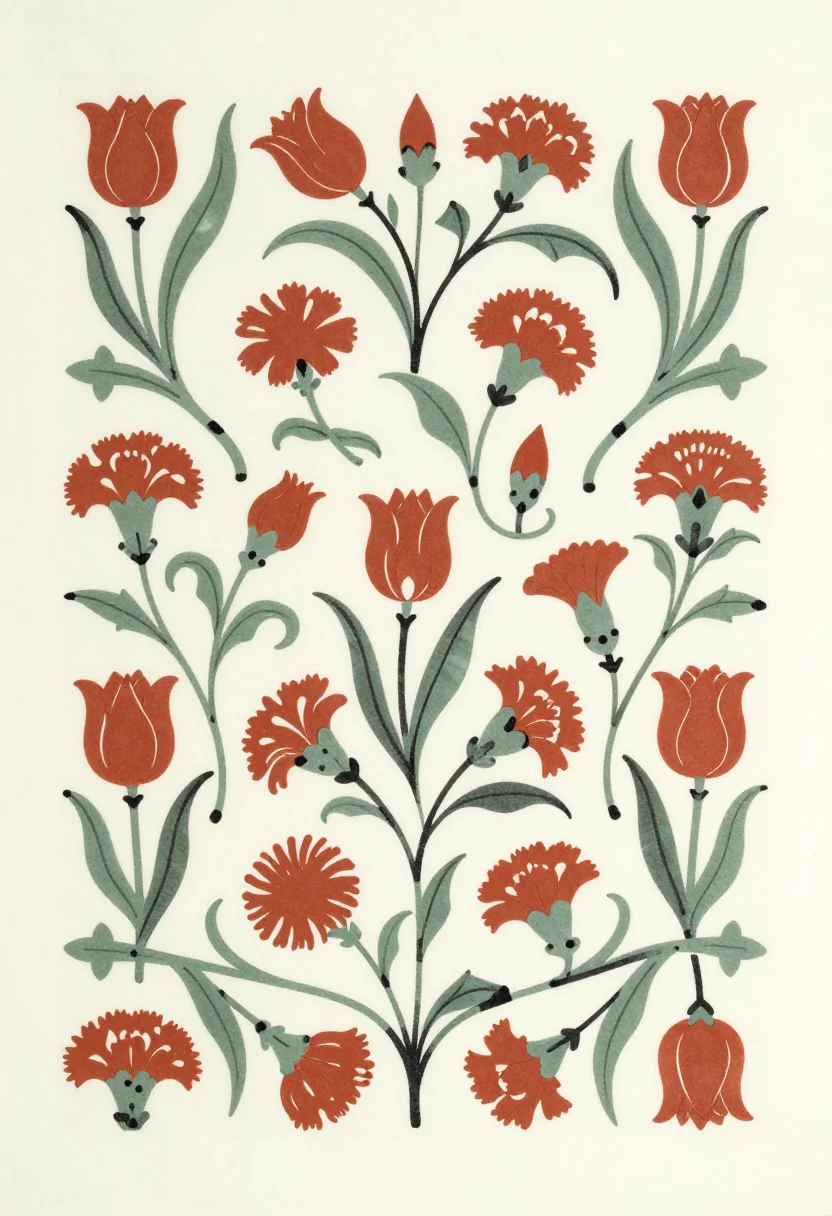
Iznik tile pattern: saz leaf, tulip, carnation
Make your ownIznik
Describe yours. We'll remake the whole pack your way.
More like this
the whole catalog →
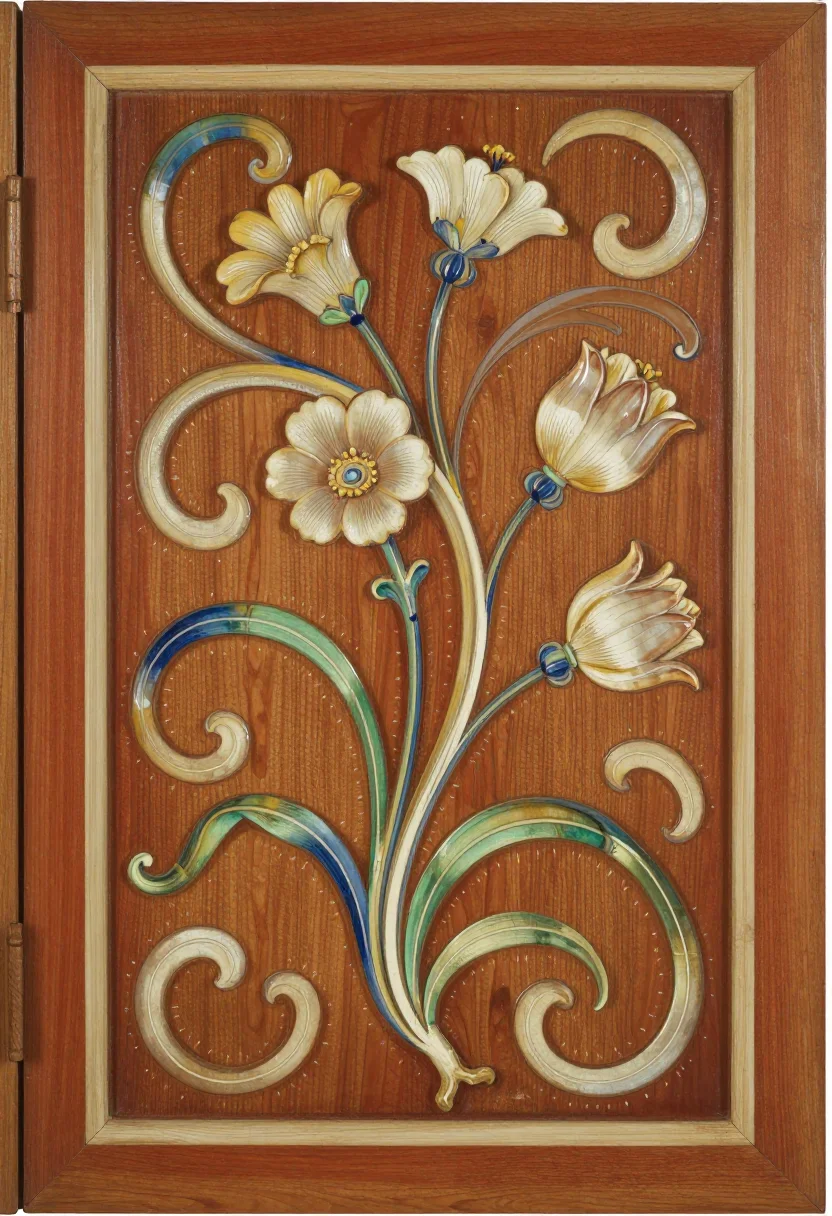
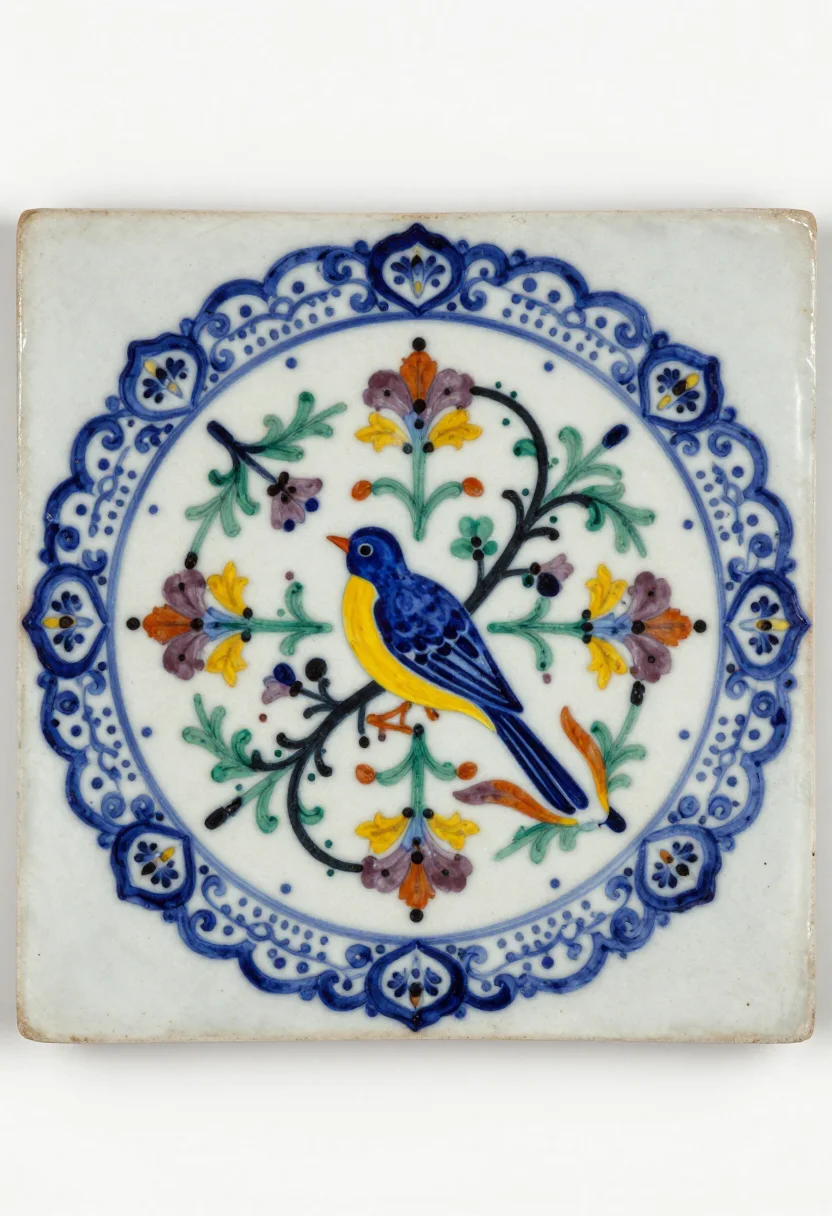
every sample — three subjects, three styles ↓
Iznik is a white quartz body under a clear glaze, and its history is a sequence of colours arriving: cobalt first, then turquoise and sage, then a thick bole red that stands slightly proud of the surface. These nine render the saz leaf, tulip and carnation motifs, each in one of those three historic palettes. Ask for a different motif — a rosette, a vine, a cypress tree — and the same three palettes carry it.
- a tile mockup for a renovation
- a wallpaper or fabric print reference
- a gift print for a heritage-conscious buyer
- a classroom bulletin board
Frequently asked questions
- What size do these print at?
- Each pattern is a seamless repeat scaled for a standard tile or fabric width, so it tiles cleanly across a wall or bolt.
- Can I get a different motif, like a rosette or a cypress tree?
- Yes — the direction field takes any motif, and the same three historic palettes render it.
- What are the three historic palettes?
- Cobalt blue alone, cobalt with turquoise and sage green, and the later addition of a raised bole red — the sequence Iznik potters actually added colours in.
- Is this respectful of real Iznik tile traditions?
- The set draws on the Ottoman Iznik tradition's visual technique — its motifs and historic colour sequence — as a style reference for a generated pattern, not a reproduction of any specific historic tile.
About toile
This page is a showcase and a starting point: nine samples already rendered, three readings of the pack crossed with three styles, each shown at the size and ratio it was made for. Take any of them further on the wall with a few words, or ask for all nine again under your own direction; a sign-in keeps what you make, and it is free while Toile is new. The recipe behind each sample — the subject, the style, the palette, the framing — travels with the image rather than staying private to the render: it is in the alt text of every sample and in the page's own structured data, so a search engine reads the same handles a person would.