/oven-temperature-charts · home
Oven temperature charts: Fahrenheit, Celsius, gas mark, fan oven
Make your ownOven temperature charts
Describe yours. We'll remake the whole pack your way.
More like this
the whole catalog →
every sample — three subjects, three styles ↓
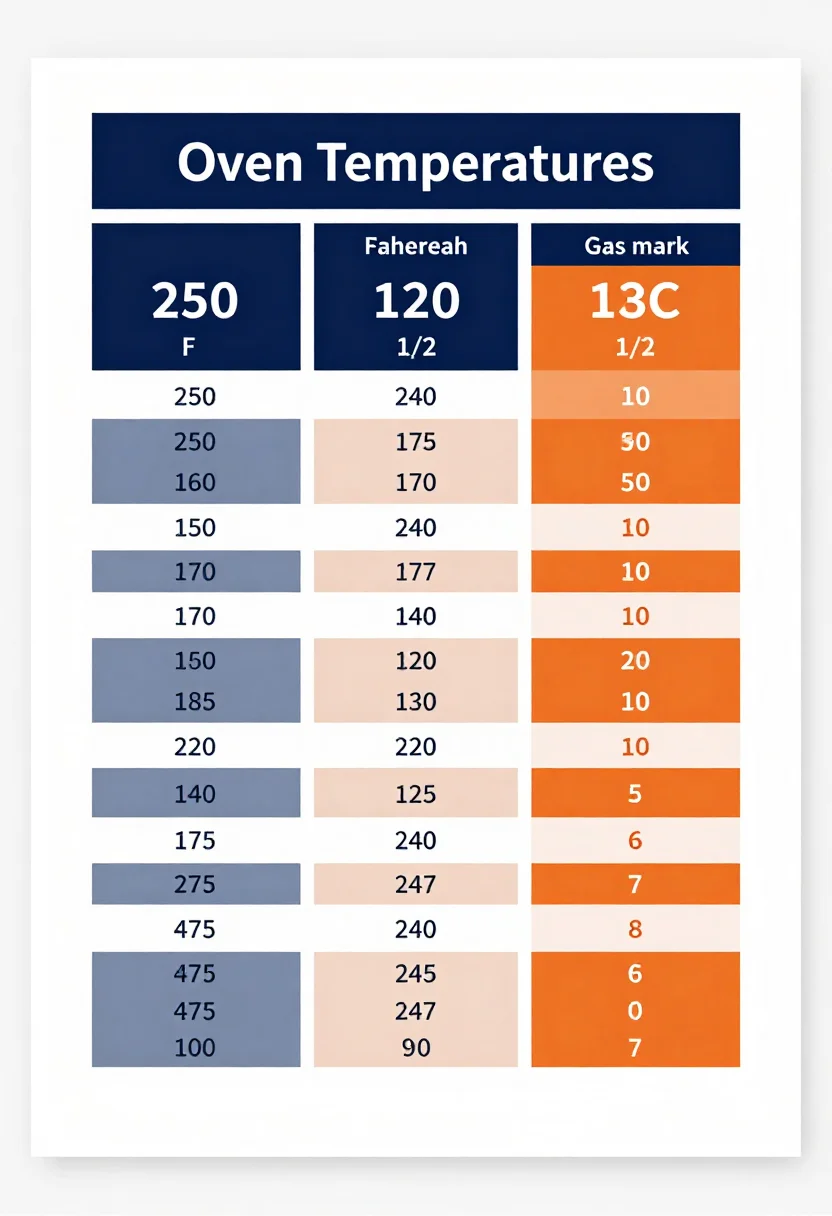
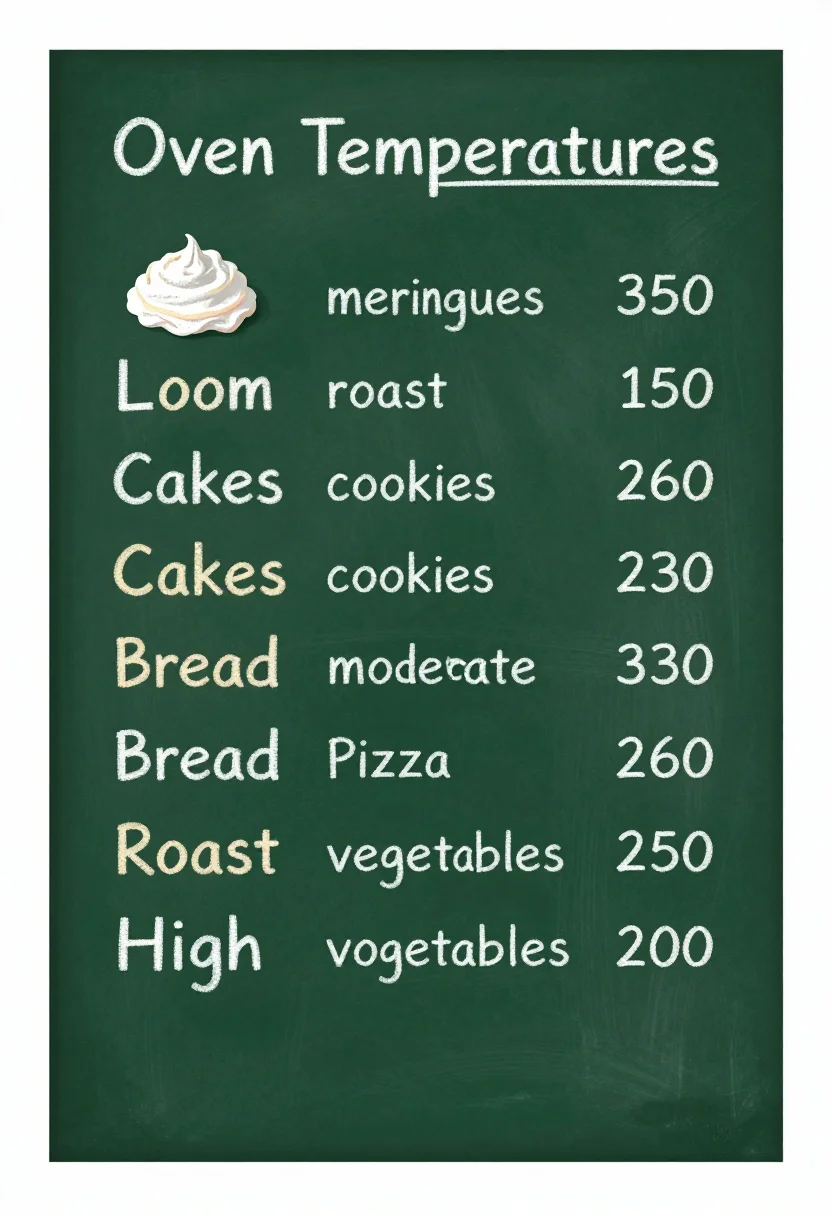
Oven temperature charts that turn a recipe's Fahrenheit, Celsius or gas mark into the setting on your oven. One table runs from 250 F or gas 1/2 up to 475 F and gas 9. A fan-oven table gives the setting 20 degrees lower than conventional, and a baking guide lists what goes in at low, moderate and high heat. Type a different subject, such as an Aga or large print, and the same styles carry it.
- the inside of a cupboard door
- a baking station
- a cookery class handout
- a card in a recipe book
Frequently asked questions
- What is a gas mark?
- Gas mark is the UK number for an oven setting; the chart lines it up with Fahrenheit and Celsius on the same row.
- How do fan-oven settings differ?
- The fan table shows the Celsius setting 20 degrees lower than the conventional one for the same dish.
- Does this replace my oven's dial?
- No. Use the chart to find the setting for the temperature a recipe asks for; your oven may still run a little hot or cold.
- Which style reads best from across the kitchen?
- The infographic style, with a bold header band and tidy columns, is the easiest to read at a distance.
About toile
This page is a showcase and a starting point: nine samples already rendered, three readings of the pack crossed with three styles, each shown at the size and ratio it was made for. Take any of them further on the wall with a few words, or ask for all nine again under your own direction; a sign-in keeps what you make, and it is free while Toile is new. The recipe behind each sample — the subject, the style, the palette, the framing — travels with the image rather than staying private to the render: it is in the alt text of every sample and in the page's own structured data, so a search engine reads the same handles a person would.