/rumor-cards · tabletop
Rumor cards: rumor sheet, single rumor note, rumor table
Make your ownRumor cards
Describe yours. We'll remake the whole pack your way.
More like this
the whole catalog →

every sample — three subjects, three styles ↓
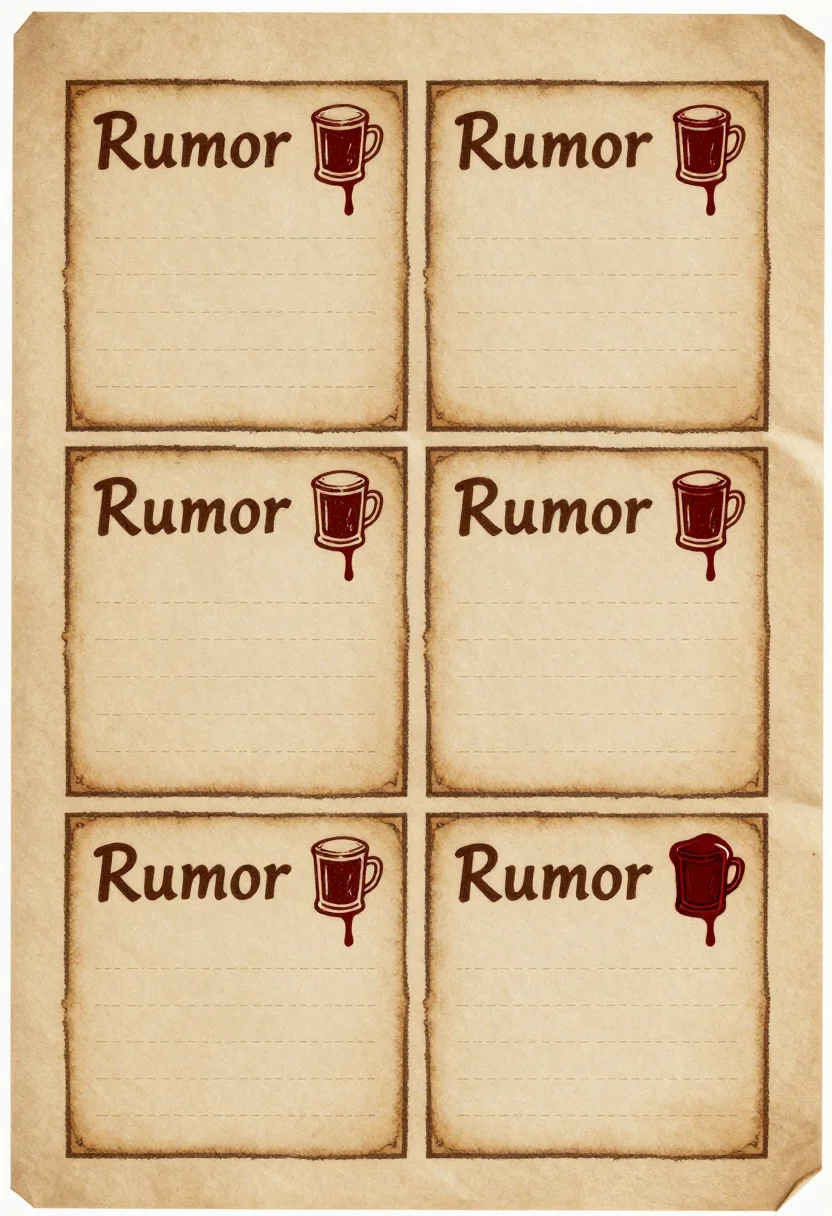
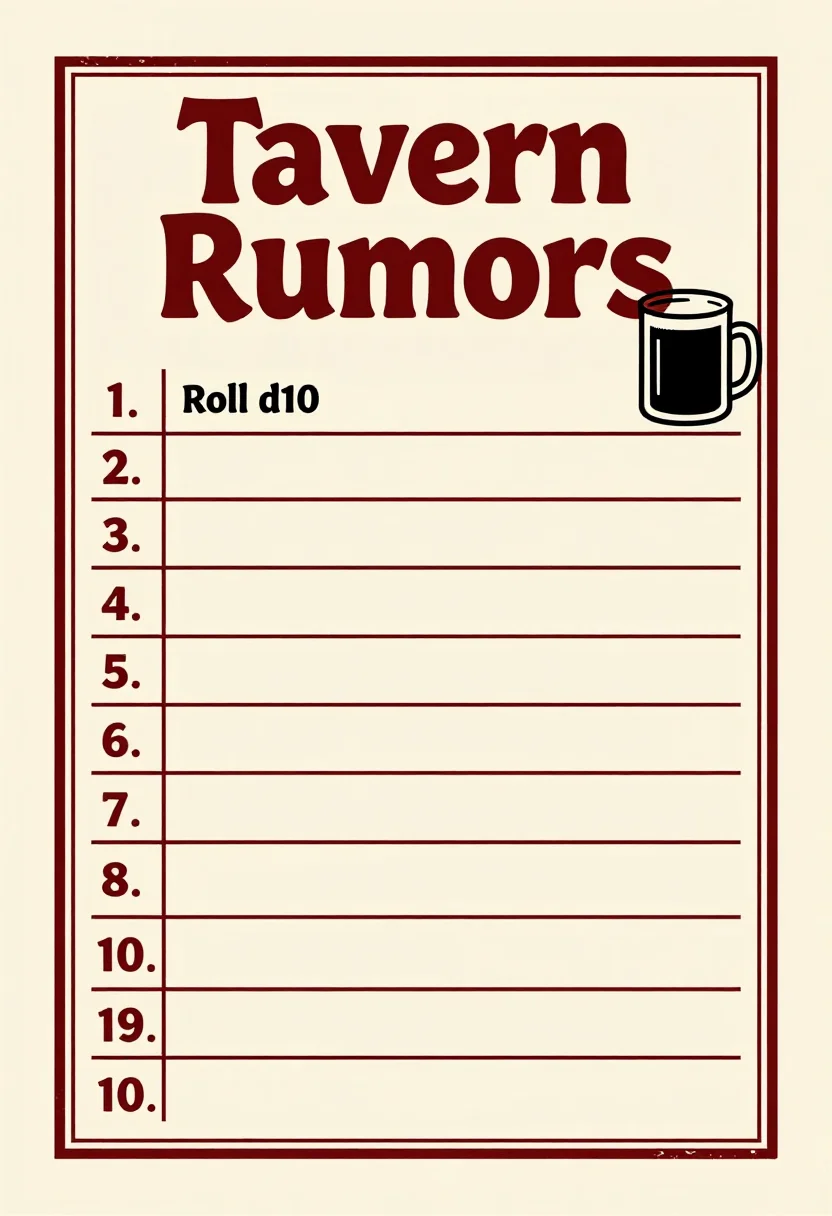
A rumor card is the hook a game master hands to a player who buys a round in the tavern: one line on a scrap of paper. This pack shows a sheet of six small rumor cards, a folded note with a wax drip, and a ten-line table to roll on. Each comes as tavern scrap, plain ink line or playbill style. Type a setting, such as haunted or harbor, and the cards keep their headings.
- a hook handed over at the bar
- a cut sheet of rumors for a session
- a d10 table to roll on when a player asks around
- a note for a player who listens in the town
Frequently asked questions
- What do the nine pictures show?
- Three readings in three styles: a sheet of six small rumor cards, a single folded rumor note, and a ten-line rumor table.
- How does the rumor table work?
- It is a ruled table numbered 1 to 10 with a header reading Roll d10. The entries are left empty, so you write one rumor against each number.
- Can I print the rumor sheet?
- Yes. The six small cards sit in a 2 by 3 grid with dashed cut lines, each with a tankard icon and ruled lines below.
- What do the styles look like?
- Tavern is stained, torn-edge paper with quill-ink handwriting. Ink line is plain black with no fills. Playbill is cream paper with oxblood lettering and stamped frames.
About toile
This page is a showcase and a starting point: nine samples already rendered, three readings of the pack crossed with three styles, each shown at the size and ratio it was made for. Take any of them further on the wall with a few words, or ask for all nine again under your own direction; a sign-in keeps what you make, and it is free while Toile is new. The recipe behind each sample — the subject, the style, the palette, the framing — travels with the image rather than staying private to the render: it is in the alt text of every sample and in the page's own structured data, so a search engine reads the same handles a person would.