/makar-sankranti-cards · faith
Makar Sankranti cards: kites, the rising sun, til and jaggery

Make your ownMakar Sankranti cards
Describe yours. We'll remake the whole pack your way.
More like this
the whole catalog →


every sample — three subjects, three styles ↓
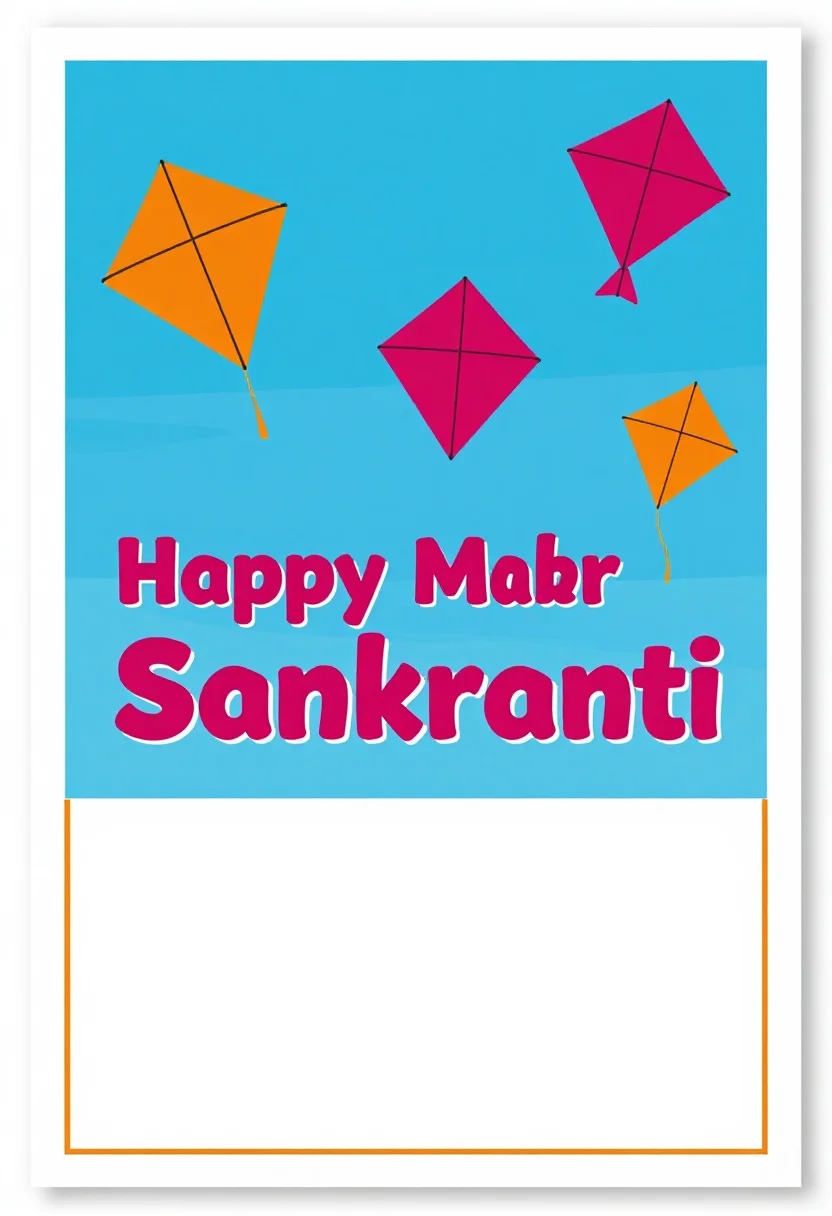
Greeting cards for Makar Sankranti, sent across India on 14 January to family, colleagues and customers. Each card carries the greeting with kites in the sky, a sun rising over green fields, or sesame laddoos and chikki beside a spool of kite string. The panel at the foot is left blank so you can write a name by hand. Type a different subject or twist, such as dark blue or gold foil, and the cards are made to that request.
- a card for family on 14 January
- a greeting for colleagues or clients
- a card for a shop's customers
- a printed card for a community gathering
Frequently asked questions
- Can I print these at home?
- Yes. Each card is a vertical, print-ready sheet with a clean margin; print it on card stock at home or at a print shop.
- Where do I write the name?
- The blank panel is left empty, so you can write a name or a message by hand after printing.
- What is the difference between the three styles?
- Flat kites uses bold geometric shapes in blue, saffron and magenta on white; block print uses indigo and terracotta on cotton cream; gouache uses opaque painted shapes on warm white.
- Can I change the subject?
- Yes. Type a different subject or twist and the card is made to that request; the nine samples stay as shown.
About toile
This page is a showcase and a starting point: nine samples already rendered, three readings of the pack crossed with three styles, each shown at the size and ratio it was made for. Take any of them further on the wall with a few words, or ask for all nine again under your own direction; a sign-in keeps what you make, and it is free while Toile is new. The recipe behind each sample — the subject, the style, the palette, the framing — travels with the image rather than staying private to the render: it is in the alt text of every sample and in the page's own structured data, so a search engine reads the same handles a person would.